10 Social Listening Services Compared for 2026
Most advice about social listening services says to pick the tool with the most data. That advice doesn't help everyone. A local plumber wants nearby homeowners who need a repair today. A global brand wants to track mood, campaigns, rivals, and trends. Those are two very different jobs.
This guide compares 10 social listening services by the job each one does best. We looked at sources, place filters, buying signals, price, setup time, past data, and data limits. Data access matters more than ever. In a Social Intelligence Lab survey of 241 pros, 64.6% named API limits and platform changes as their top challenge (Datashake). The same research found that 78.5% of listening teams use more than one tool to fill gaps (Brand24).
We start with ThroughTheGrapevine.ai, our own local-first tool. Then we move through self-serve trackers, social media suites, PR tools, and big research platforms. The best pick isn't the one that finds the most mentions. It's the one that turns the right public posts into work your team can act on.
Table of Contents
- 1. ThroughTheGrapevine.ai
- 2. Brandwatch Consumer Research
- 3. Talkwalker Social Listening
- 4. Sprout Social Listening
- 5. Meltwater Social Listening
- 6. Sprinklr Insights
- 7. Brand24
- 8. Agorapulse Listening (Formerly Mention)
- 9. Awario
- 10. Quid (NetBase Quid)
- Social Listening Services Comparison Table
- How to Choose Social Listening Services That Fit the Job
1. ThroughTheGrapevine.ai
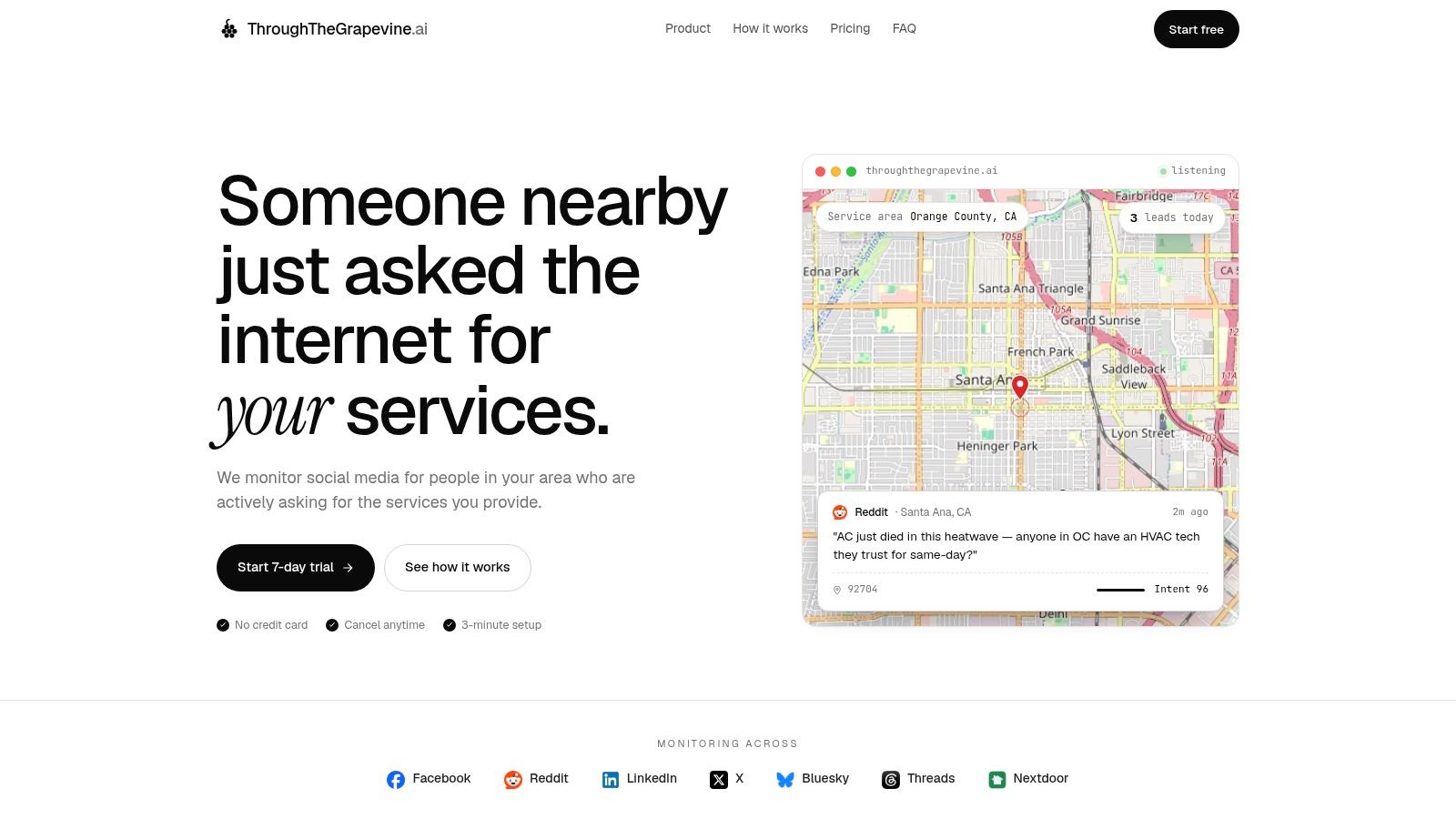
ThroughTheGrapevine.ai asks a narrower question than most social listening services. Who in my area is asking for the work I do right now? That makes it a good fit for plumbers, roofers, landscapers, dentists, lawyers, and other local service pros. They need jobs nearby, not a global mood report.
The tool reads public posts on Facebook, Reddit, LinkedIn, X, Bluesky, and Threads. For Facebook, you add the groups you want it to watch. The other sites run on keywords. It pulls place clues from each post. Those include city and neighborhood names, ZIP and area codes, the group or subreddit, and the place listed on the account. Then it drops any post outside the service area you draw. The default radius is 25 miles, and the company reports 97% location accuracy.
Why does local intent change the picture?
A feed full of brand mentions doesn't help a field crew. ThroughTheGrapevine.ai scores each post from 0 to 100 for buying intent and urgency. A post like "AC died, need it fixed today" ranks high. Rants and research posts sink. Rate a lead with a thumbs up or down, and the scores learn your judgment. If the same person posts the same job in three groups, you hear about it once.
Setup is built for small teams. You paste your website and your service area. The tool reads your site and builds the keyword list for you, so there's no Boolean search to learn. It scans each site every 8 hours. After each scan, you get an email with the new leads. Each lead shows the post, a direct link, the place, the intent score, and a suggested reply. You can also see every match in one dashboard. You can export leads to CSV for a spreadsheet or CRM, too.
Best fit: A local service business that cares more about nearby job requests and fast replies than brand reports.
Pricing is simple. There's one plan at $99 a month with unlimited leads. The 7-day free trial needs no credit card. You don't link any social accounts, since the tool only reads public posts.
The trade-offs are real. It can't see private groups, DMs, or posts behind a login. An 8-hour scan cycle is too slow for a crisis team that needs alerts by the minute. It also doesn't track mood, share of voice, or news, so it won't replace a brand research suite.
Pros
- Local-first targeting: It only sends posts from inside your service area.
- Intent scores: A 0–100 score puts real job requests at the top.
- Fast setup: It builds your keyword list from your website.
- Low friction: You get email alerts, reply drafts, one dashboard, and CSV export.
- Simple pricing: One $99 monthly plan comes with a 7-day free trial.
Cons
- Public posts only: It can't read private groups, DMs, or locked posts.
- Set scan times: An 8-hour cycle may be too slow for crisis work.
- Narrow focus: It isn't built for brand research or news tracking.
2. Brandwatch Consumer Research
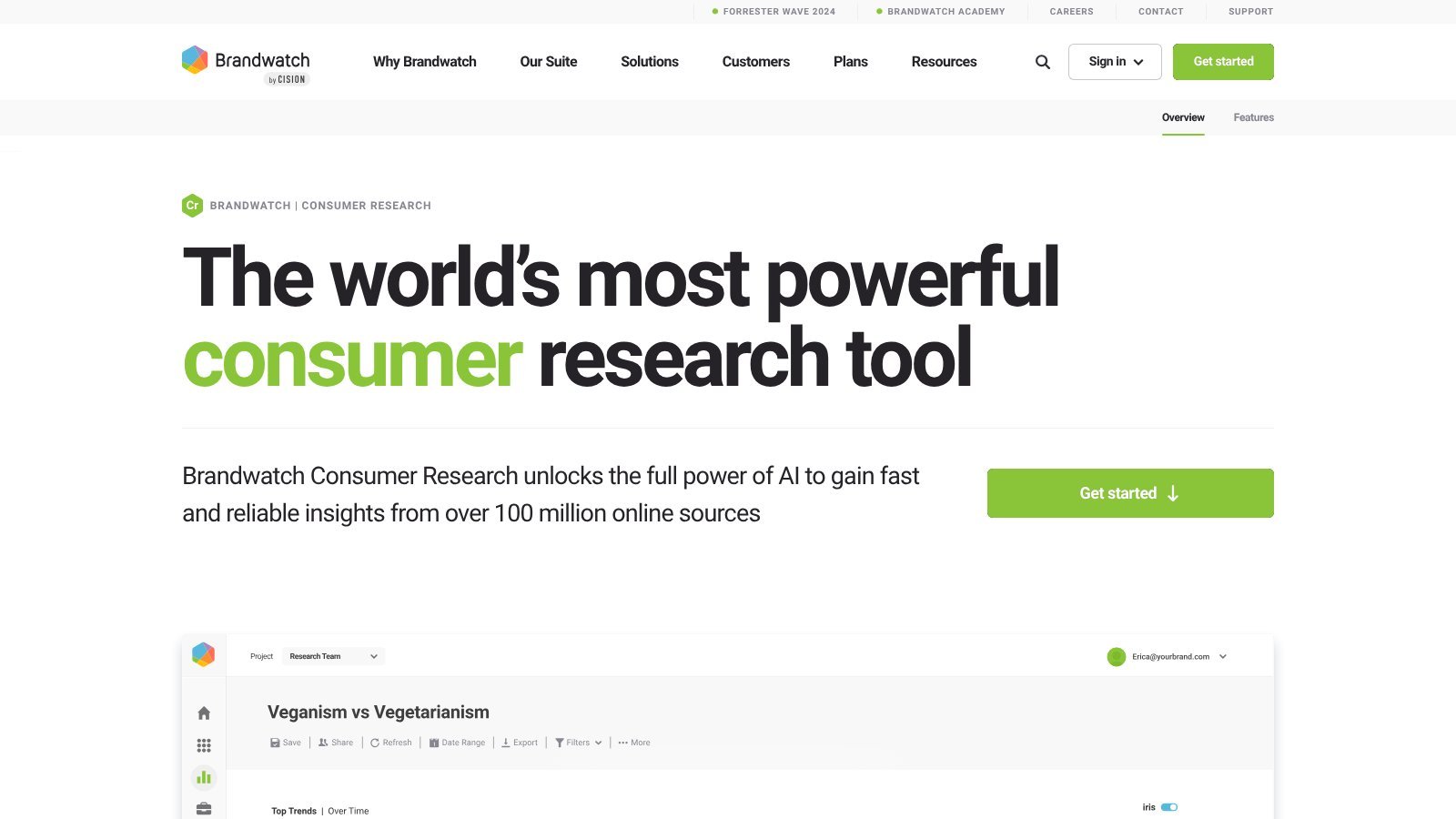
Brandwatch Consumer Research is the best pick here for teams that treat social listening as research, not an alert inbox. It draws on more than 100 million online sources. Its archive holds over 1.4 trillion posts going back to 2008. Iris, its AI helper, turns that data into plain-language insights. It can also read images, and you can train your own data tags.
That depth suits research and strategy teams. An analyst can study how people talk about a market over years. They can split the data by audience or region and spot shifts that single alerts would miss. It answers big strategic questions. It isn't built for a small business owner who wants to reply to a nearby job request.
What does all that depth cost?
Brandwatch's power takes setup work. Someone has to own search rules, tags, dashboards, user access, reports, and the analysis. You may get far more insight than a light tracker gives you. But you also need a steady process to turn the data into decisions.
Pricing is by quote. Ask what's included for past data, sources, users, exports, support, and add-on apps. Run the demo with your real brand terms, rival names, product words, and markets. Generic sample searches prove very little.
For a local business, Brandwatch is likely overkill. For a global brand, agency, or insights team, that breadth is the point. To see how tracking tools differ from full listening tools, read our guide to social media monitoring software.
3. Talkwalker Social Listening
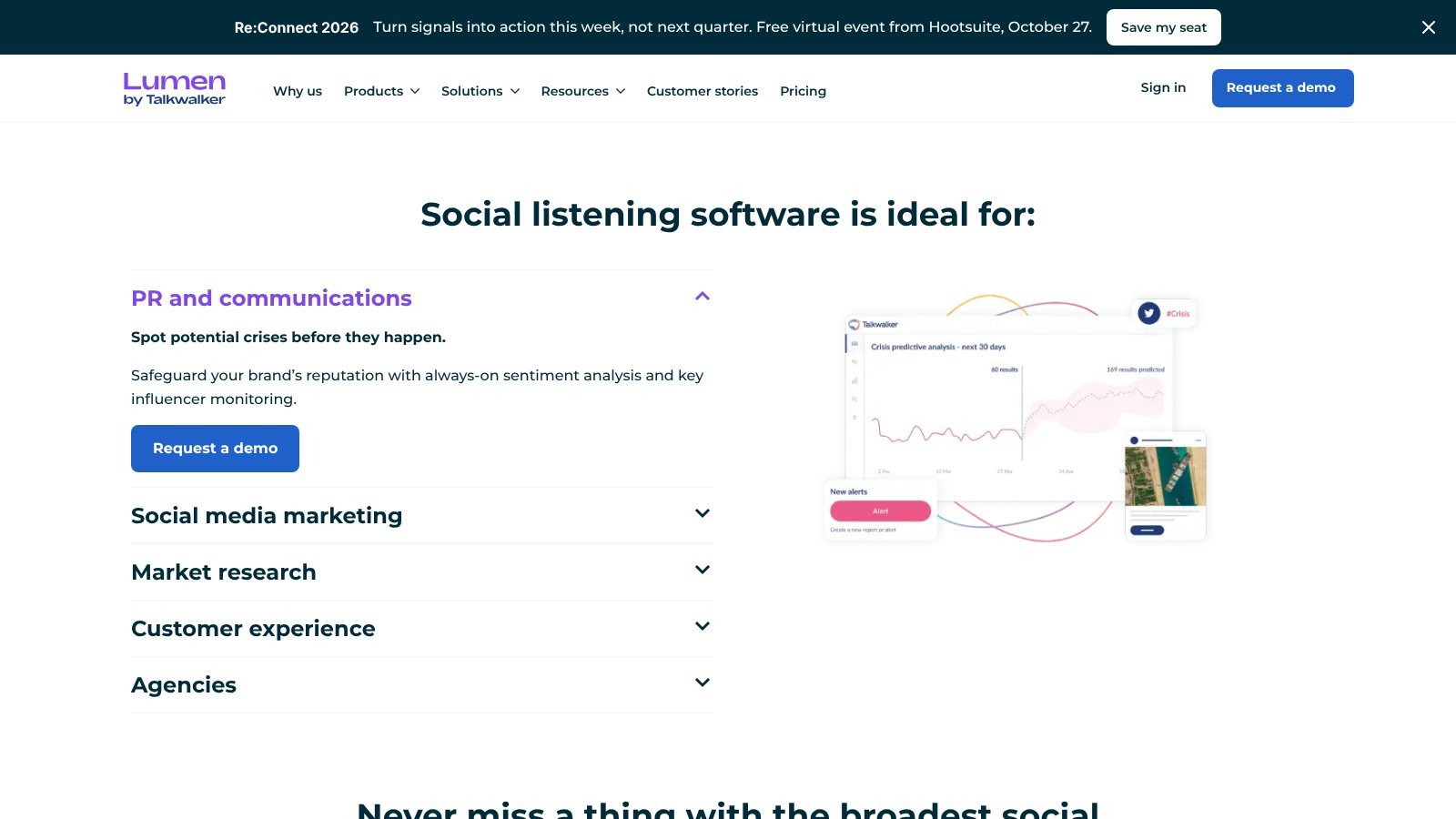
Talkwalker pairs social and web listening with sentiment, trend spotting, and crisis alerts. It covers 30+ social networks and 150 million websites in 239 countries and regions. Its standout feature is visual listening. It can spot your logo and brand in images, video, and audio, even when no one types your name.
That helps campaign and brand health teams, because your brand often shows up in photos and clips with no text mention. Hootsuite agreed to buy Talkwalker in April 2024. That appeals to teams that want listening to sit close to posting and replies.
Who is Talkwalker best for?
Talkwalker is built for larger teams. The typical buyer is a marketing, PR, or insights team that compares brand health across markets and campaigns. It's not a local owner hunting for a few nearby requests.
Pricing comes by custom quote across three plans, called Core, Analyze, and Business. Before you compare offers, test source access, past data, image tools, user roles, exports, and links to your other apps. Ask which sites and content types it covers in your regions. Broad coverage claims don't mean equal access to every network.
A rich view of brand health can turn into noise without clear goals. A crisis team needs rules for who acts and when. A campaign team needs a baseline. An insights team needs a way to turn trends into decisions, not just another dashboard.
4. Sprout Social Listening
Sprout Social is a smart choice when listening is just one part of a social team's day. The core tool covers scheduling, posting, a shared inbox, replies, and reports. Listening is a paid add-on. It adds Smart Categories, sentiment scores, and spike alerts for sudden jumps in volume or mood.
This is a different offer from Brandwatch or Quid. Sprout puts public talk inside your daily social workflow. A team can spot a shift, talk it over, post a reply, and report on it in one place.
Why does publishing decide it?
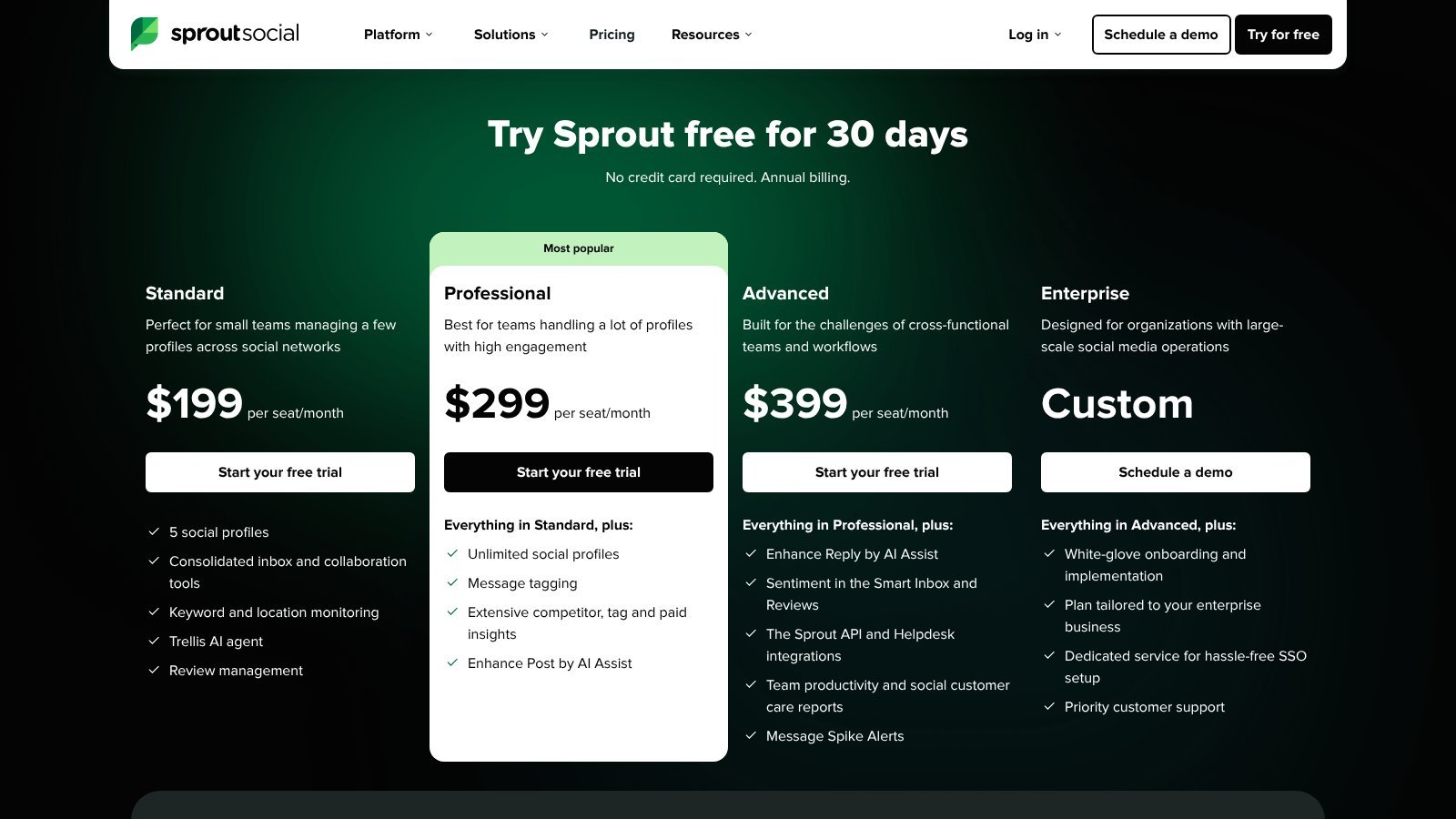
Sprout makes the most sense for teams that already need a publishing tool. The add-on can cut down on tool sprawl. But your final cost depends on seats, plan level, and add-ons. Core plans are public. Standard costs $199, Professional costs $299, and Advanced costs $399 per seat each month, billed yearly. Listening is priced on top, and you can add it from Standard up. There's a 30-day free trial.
Per-seat pricing gets costly as more people need access. A small team may love the shared workflow. A large company should price out seats for analysts, approvers, community managers, and regional staff.
Sprout isn't the obvious pick for local lead finding. It's built for running social accounts, not for spotting buyers in a service area. It shines when a team needs to listen, post, reply, and measure in one place.
5. Meltwater Social Listening
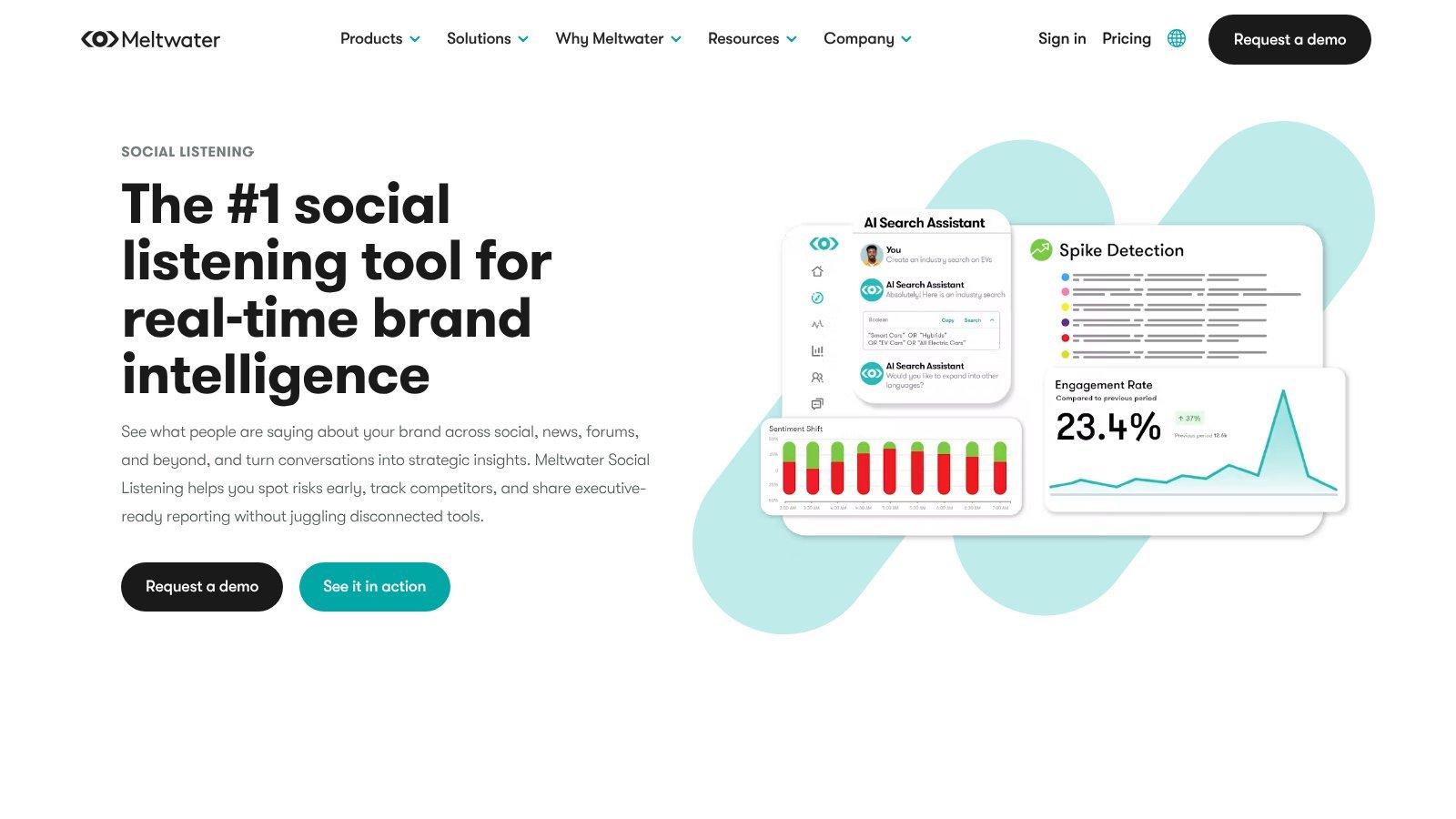
Meltwater suits teams that want social listening and media tracking from one vendor. It tracks social, news, forums, and Reddit in one place. It adds rival benchmarks, AI alerts for spikes and mood shifts, and reports built for leaders. Alerts can go to Slack or Teams. Its AI helper, Mira, can turn raw signals into updates you can share.
That mix fits PR and comms teams best. A brand issue can start in social posts and spread to news and blogs. PR teams often want one report for all of it, not separate social and news tools. Clean reports also help when leaders want a quick summary, not an analyst's working dashboard.
Why is Meltwater a news-first choice?
Meltwater's main edge isn't just the number of social sources. It's the link between social posts and news coverage. PR teams can see if a story stays on social or breaks into the news. Then they can plan press outreach and updates for leaders around it.
The cost is breadth. Pricing is by quote, and you may get more features than you need. Split your must-haves from the nice-to-haves. Then ask for a proposal that lists social sources, news access, past data, alert limits, exports, reports, users, and support.
Meltwater isn't a natural fit for a local contractor who needs a fast email about a nearby job. It makes more sense when brand image, press coverage, rival messaging, and reports for leaders all matter at once.
6. Sprinklr Insights
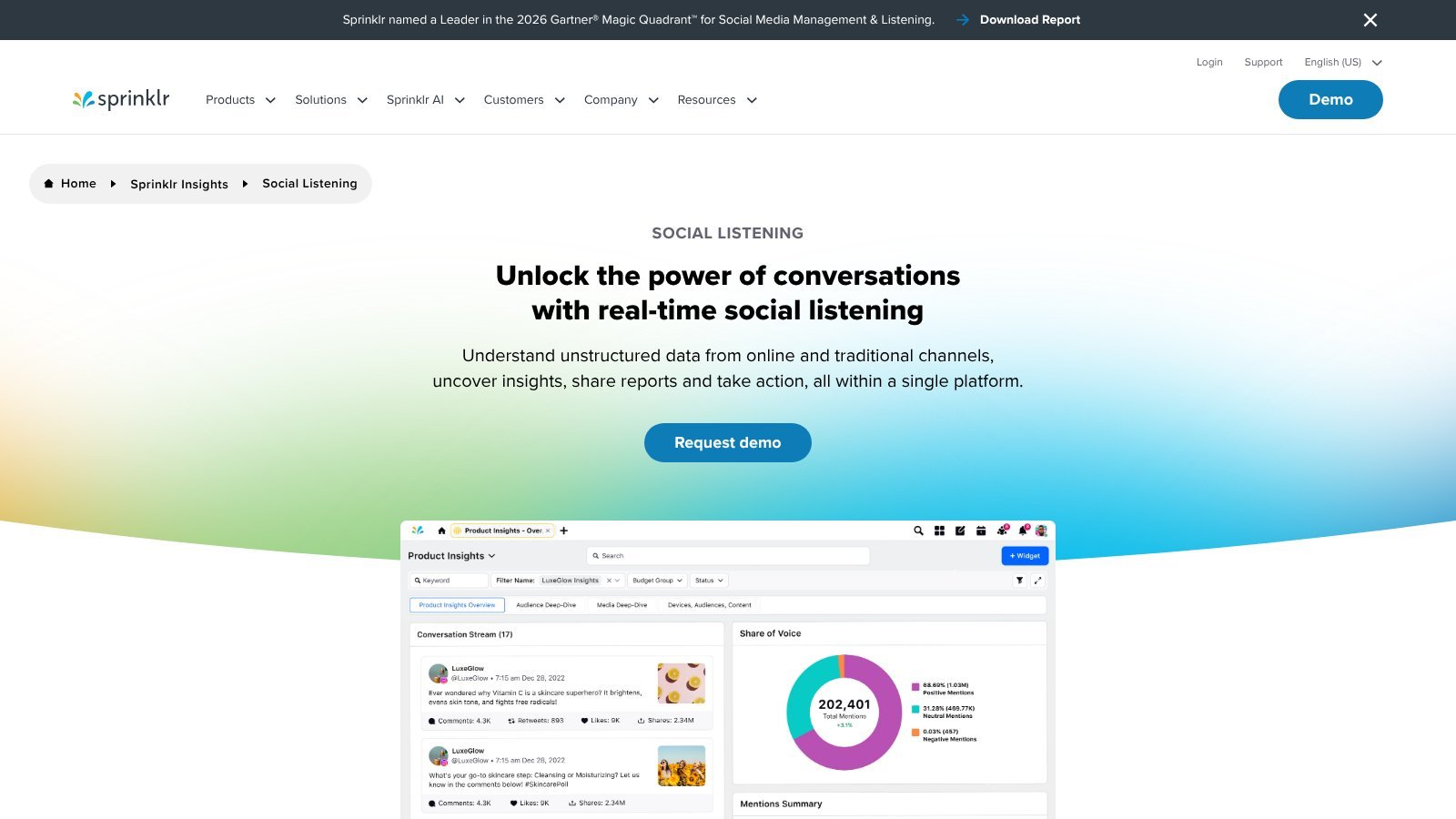
Sprinklr Insights sits at the top end of the market. Its listening tools live inside Sprinklr's Unified-CXM platform. That platform spans social, marketing, service, and customer experience. Sprinklr watches 30+ social and digital channels in real time. Its AI surfaces themes, trends, and odd spikes. It can also detect logos in images, GIFs, and videos. Sprinklr says Gartner named it a Leader in the 2026 Magic Quadrant for Social Media Management and Listening.
The real benefit is less distance between insight and action. A care team can spot a repeat problem, send it to the service team, and link it to other customer data. Marketing can use the same system for campaigns and audience work.
Why does scale need clear rules?
Sprinklr isn't a light purchase. Custom pricing, setup, training, user rights, app links, and internal rules all shape the project. You need a clear owner, defined business units, shared tags, a path for urgent issues, and a training plan.
Setup test: Ask the vendor to show how one real signal moves from first alert to owner, reply, sign-off, and report.
Sprinklr is a strong choice for a global company where several teams need linked listening, replies, marketing, and service. It's a poor match if you just want local requests or basic brand alerts. A smaller buyer could pay for scale it never uses.
7. Brand24
Brand24 is one of the faster, self-serve social listening services to set up. It tracks 25 million online sources. Those include Facebook, Instagram, X, Reddit, LinkedIn, YouTube, TikTok, news, blogs, podcasts, newsletters, and review sites. You get sentiment, AI insights, storm alerts, a mobile app, and reports in PDF, Excel, or slide format.
Its appeal is speed. A small marketing team or agency can start tracking a brand, rival, or campaign without building a big research program. It's a sensible step up from free alerts and manual searches.
Why doesn't low cost mean it fits everyone?
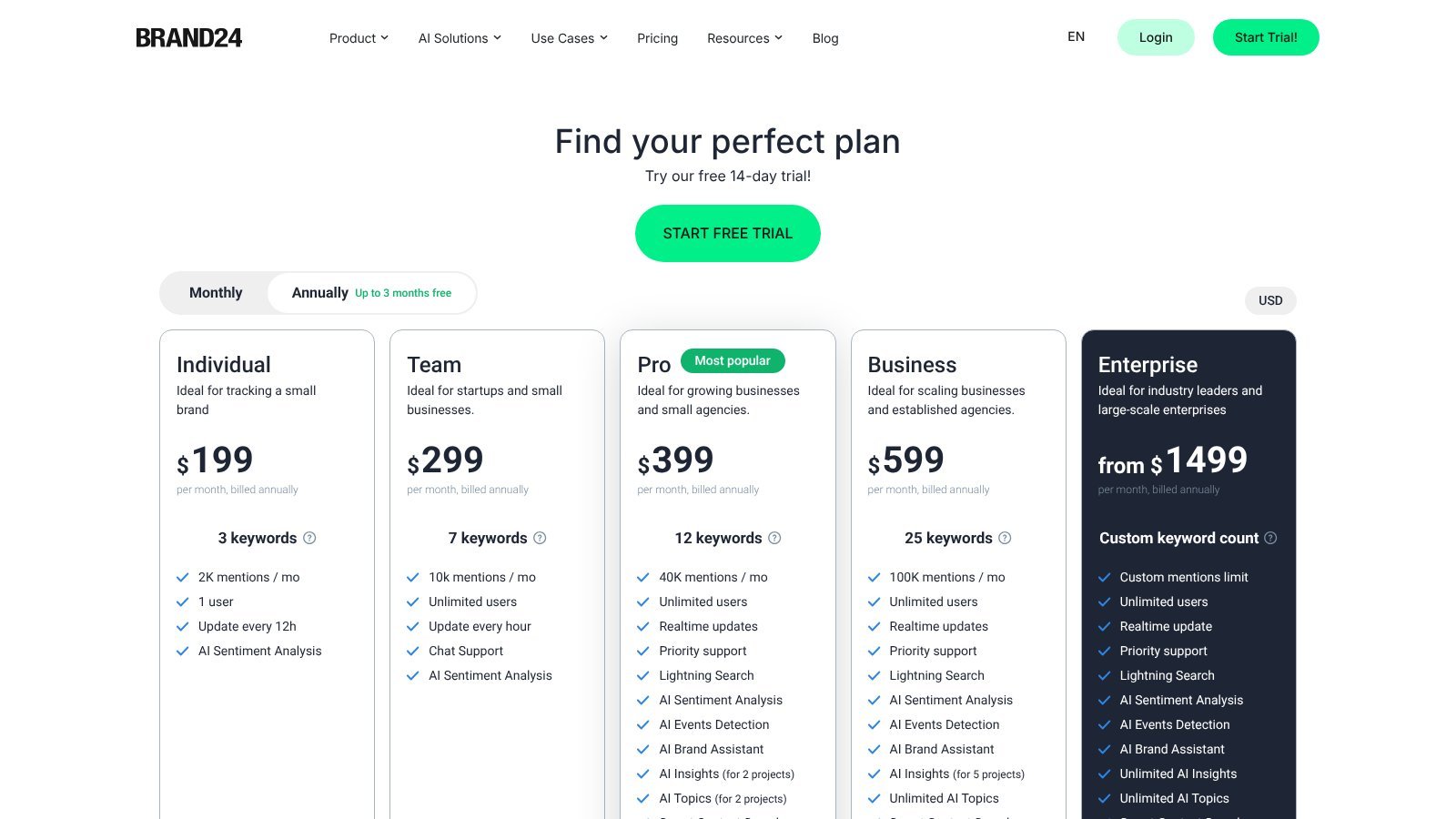
Brand24's trade-off is depth. It isn't built like the big research suites. Test whether its archive, sources, language support, sentiment, and filters meet your needs. Plans start at $199 a month billed yearly, or $249 month to month. That entry plan covers 3 keywords, 2,000 mentions a month, and one user. It updates every 12 hours, and real-time updates start on Pro. There's a 14-day free trial, and API access costs an extra $149.
Brand24 is best for brand tracking, campaign checks, and light rival tracking. It doesn't focus on local buying intent. A local service business would still need to sort nearby job requests from everything else by hand.
Decide who gets the alerts and what happens next. If no one owns the inbox, even a low-cost tool becomes another ignored dashboard. Our social media listening platform guide explains how full listening differs from basic tracking.
8. Agorapulse Listening (Formerly Mention)
Mention was a popular mid-market tracker until Agorapulse bought it. Since July 1, 2026, Mention is no longer sold as a standalone product (Mention Help Center). Current customers can keep their plans. New buyers are pointed to Agorapulse Listening.
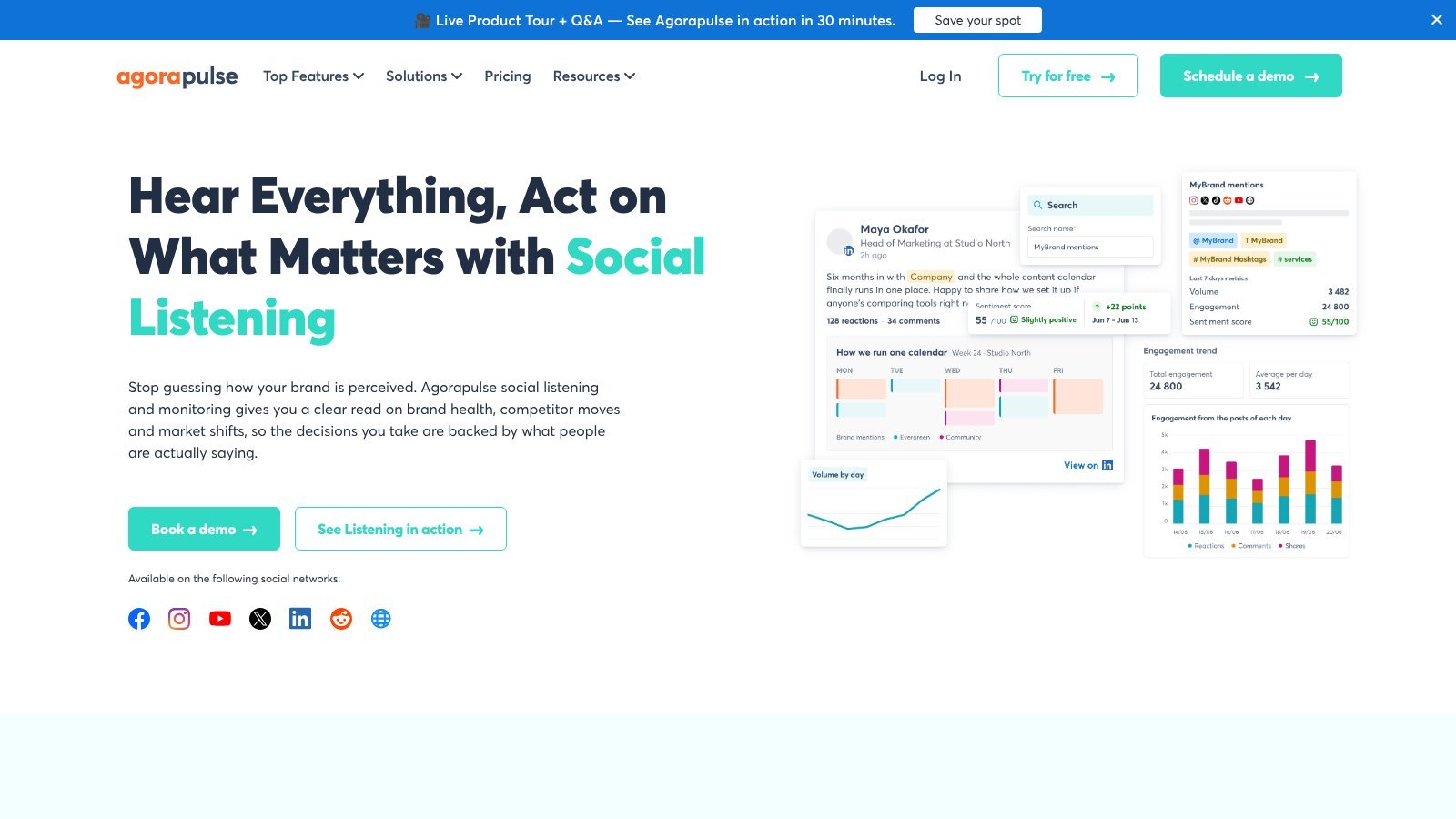
The new tool tracks Facebook, Instagram, YouTube, X, LinkedIn, and Reddit, plus direct mentions on TikTok. It also covers thousands of news sites, blogs, and forums. It keeps up to 24 months of past data. An AI step called Listening Screening removes off-topic matches in one click, so you don't have to write Boolean rules. You also get a share-of-voice view against rivals and exports to CSV, JSON, or PDF.
Is listening plus posting worth it?
The big draw is the link to the full Agorapulse social media suite. Listening data flows into the same reports as your posts, inbox, and stats. That suits agencies and social teams that already use it.
You can buy it as an add-on to the Advanced or Tailored plans, or on its own. All sales go through the sales team, so there's no public price for listening. Ask about past data, search limits, exports, and seats before you sign.
It fits brand tracking, rival checks, and campaign reports. It's less suited to deep research. It also doesn't pull local buying intent from a set territory.
9. Awario
Awario is a budget pick for startups, small firms, and teams moving past Google Alerts. It tracks social media, news, blogs, videos, Reddit, and the web. Every plan includes Boolean search, and the tool adds sentiment and real-time tracking.
Its biggest plus is clear pricing. Starter costs $49 a month, or $29 a month billed yearly. It covers 3 topics and 30,000 new mentions a month for one user. Pro costs $149 a month, or $89 billed yearly. It adds CSV export, PDF reports, and up to 10 users. Enterprise costs $399 a month, or $249 billed yearly, and adds API access. You can check those limits against your needs before you ever talk to sales.
How do quotas shape the use case?
Awario's simple plans come with limits. Heavy tracking can run into mention caps, and its insights are lighter than the big research tools. Boolean search also puts more work on you. A weak search can return junk, miss variations, or create an alert stream nobody reads.
Awario works best for narrow questions your team can maintain. A startup might track its brand, product, rivals, and a few market terms. A PR team facing a crisis in many languages will likely need more.
Awario can surface people who look for products like yours, but it doesn't filter by service area. A local business could search for service terms and place names. Your team would still have to judge intent, check the place, remove duplicates, and decide if the poster wants a provider. That's the gap between a general tracker and a local-first lead tool.
10. Quid (NetBase Quid)
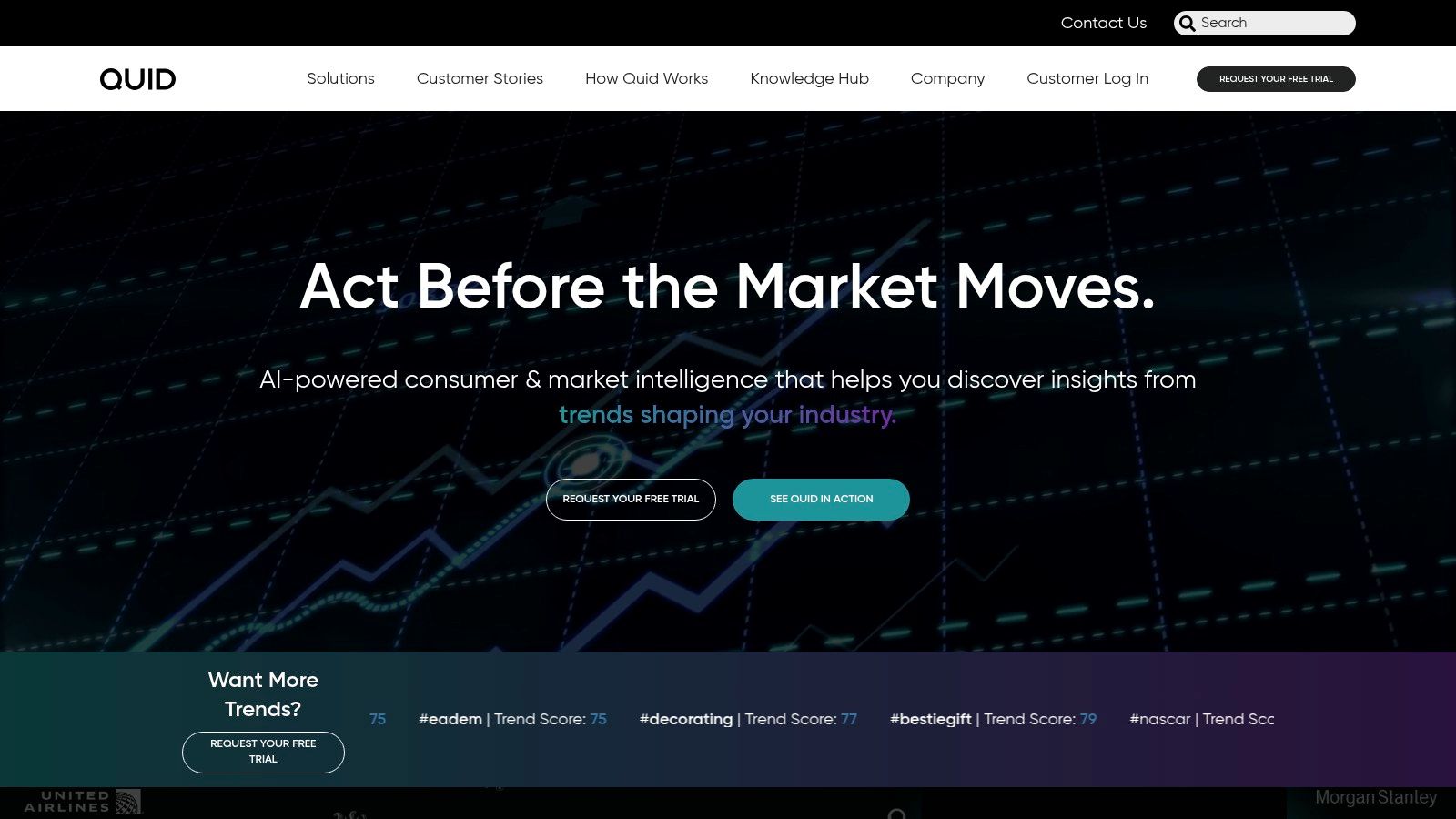
Quid, long sold as NetBase Quid, is built for deep consumer and market research. It takes in more than 2 petabytes of data through deals with social, news, search, broadcast, patent, and investment sources. Twenty years of in-house language and sentiment models sit behind it. Its products include Quid Discover and Quid Monitor.
That makes it a strategy tool, not a community tool. Insights teams use it to study themes, trends, rivals, and market language. The output feeds product, marketing, and leadership decisions, not quick replies to single posts.
Is the research value worth the setup?
Quid's strength is linking social talk to wider market proof. You can ask harder questions than what people say about your brand. How is a market changing? Which themes show up across sources? How does rival chatter fit the bigger picture?
The cost is setup time. Quid doesn't publish prices, so you request a trial or a demo. Expect to spend on training, search design, data rules, dashboards, and analyst time. Run the demo on your real markets. A polished sample chart doesn't prove the right sources are there.
Quid isn't the right pick for a local owner chasing a nearby job. It makes sense when research teams need shared proof across a large company.
Social Listening Services Comparison Table
| Service | Best for | Key strengths | Starting price |
|---|---|---|---|
| ThroughTheGrapevine.ai | Local service businesses that want nearby job leads. | Six social sites, a service-area filter, intent scores, email alerts, and reply drafts. | $99 a month with a 7-day free trial. |
| Brandwatch Consumer Research | Research and insights teams at large brands. | Over 100 million sources, posts back to 2008, and the Iris AI helper. | Custom quote. |
| Talkwalker | Campaign, brand health, and crisis teams. | Visual listening that finds logos in images, video, and audio. | Custom quote on three plans. |
| Sprout Social Listening | Social teams that want posting and listening in one tool. | Smart Categories, sentiment, and spike alerts inside a full social suite. | Core plans from $199 per seat a month, plus the add-on. |
| Meltwater | PR and comms teams. | Social, news, forums, and Reddit in one place, with reports for leaders. | Custom quote. |
| Sprinklr Insights | Global firms with linked customer care teams. | Over 30 channels, AI themes, spike alerts, and logo detection. | Custom quote. |
| Brand24 | Small brands and agencies. | 25 million sources, sentiment, storm alerts, and a mobile app. | From $199 a month billed yearly. |
| Agorapulse Listening | Agencies and social teams on Agorapulse. | 24 months of past data, AI screening, and share of voice. | Through sales only. |
| Awario | Startups and small teams leaving Google Alerts. | Boolean search and clear mention quotas. | From $29 a month billed yearly. |
| Quid | Strategy and market research teams. | Social, news, and market data with deep AI tools. | Custom quote or a free trial on request. |
How to Choose Social Listening Services That Fit the Job
Start with the decision, not the vendor list. To find local leads, look for service-area filters, place checks, intent scores, fast alerts, duplicate removal, and a quick way to reply. For brand work, look for search control, good sentiment, spike alerts, solid sources, and a clear plan for urgent issues.
Posting is its own category. If your team schedules posts, handles replies, and reports on social, try Sprout Social or Agorapulse. PR teams should look at Meltwater when news belongs next to social. Campaign and insights teams may prefer Talkwalker or Brandwatch for image tools, trends, and past data.
Big buyers need to weigh rules and owners as much as features. Sprinklr and Quid are the social listening services built for complex needs. But their value depends on setup, training, app links, user rights, and clear owners. A tool that can do everything still fails when no one decides which signals need action.
Can the tool see the posts you care about?
Ask each provider what it can really see in your markets and groups. Facebook, Instagram, TikTok, LinkedIn, Discord, forums, review sites, and private groups all give different levels of access. Platform rules keep getting tighter. That's why API limits topped the survey we cited above. Ask for a source-by-source breakdown instead of trusting an all-in-one label.
Test the place filter on its own. A city keyword is not the same as a checked service-area match. For a local business, out-of-area posts waste more time than a few accurate leads save. ThroughTheGrapevine.ai fits when you need job requests in your area. The big suites fit broad research, governance, press coverage, or global work. For tips by site, see our guides to Reddit lead generation and getting leads from Facebook groups.
How should you test before you commit?
Build your shortlist around real searches. Use your brand names, rival terms, service requests, local place names, campaign words, and crisis phrases. Then check the junk results, duplicates, sentiment errors, place accuracy, alert timing, and the quality of past data.
Don't judge success by mention counts. Judge it by whether the tool helps someone reply faster, win a good job, fix a customer issue, improve a campaign, brief leaders, or make a sound research call. Sprout Social's 2026 Social Intelligence Report found that only 10% of businesses can turn real-time social insights into action within hours (Sprout Social). That gap is as much a workflow problem as a software problem.
Last, get the terms in writing. Check price, user limits, search limits, past data, exports, API terms, blocked sources, support, onboarding, and renewal terms. The market is growing fast. Research and Markets puts it at $10.37 billion in 2025 and $12.15 billion in 2026, rising to $22.61 billion by 2030 (Research and Markets). More spending won't fix an unfocused program. The right social listening service gives your team a signal it can trust and an action it can take.
ThroughTheGrapevine.ai finds public posts where people near you ask for the services you offer. It filters them to your service area, scores buying intent, removes duplicates, and emails you each lead with a suggested reply. Want to see who's asking near you right now? Visit ThroughTheGrapevine.ai to start a 7-day free trial with no credit card.