Local SEO Lead Generation That Turns Searches Into Jobs
A pipe bursts at 7 a.m. The homeowner grabs a phone and types “emergency plumber near me.” The first local business that looks trustworthy gets the call. That moment is what local SEO lead generation is all about. You don't need everyone online to find you. You need the right person, in your area, at the moment they need help.
Google's own research shows how fast these searches turn into action. In 2016, Google found that 30% of all mobile searches were tied to a location. It also found that 76% of people who search on their phones for something nearby visit a business within a day. And 28% of those searches end in a purchase (Think with Google). The data is old, but the point still stands. People who search locally are often ready to buy.
Table of Contents
- What Is Local SEO Lead Generation?
- How Does Local SEO Lead Generation Work?
- Build Your Local Foundation, From Profile to Website
- Turn Reviews Into More Local Leads
- Create Local Content That Matches Buying Intent
- Add Social Listening to Catch Leads Google Misses
- Measure Booked Jobs, Not Traffic
- Local SEO Lead Generation FAQs
What Is Local SEO Lead Generation?
Local SEO lead generation means using local search to win calls, form fills and booked jobs from people in your service area. It covers your Google Business Profile, your spot in the map results, your website, your reviews and how fast you reply.
General SEO can bring in readers from anywhere. Local SEO brings in people you can actually serve. For a plumber, roofer, dentist or landscaper, location is not a small detail. It decides whether a lead can become a job.
Think about two searches. One person types “how to fix a leaking water heater.” They want to learn. Another types “water heater repair in Denver.” They want someone to come out. Both searches use useful words, but only the second one is a job. Local SEO works best when your profile, site, reviews and reply process are all built for that second search.
Buyers reach you through many doors. They might see your phone number in the map results and call without visiting your site. They might read your reviews first. They might find you through a neighbor on Facebook, or ask an AI tool to list local options. Your job is to make each of those places accurate, useful and easy to act on.
The big idea: Rankings create chances. A lead system turns those chances into calls and booked work.
This guide treats local SEO as one system, not a list of ranking tasks. You'll learn how to build the base, write pages for buyers, use reviews to win trust, catch requests outside Google and track real jobs instead of traffic.
Speed matters too. A strong listing that gets a call no one answers is a lost job. Relevance gets you seen. Trust makes people feel safe to call. A fast reply gives you the chance to win the work.
How Does Local SEO Lead Generation Work?
Picture local search as a busy street full of shops. Google decides which shops to show each person who walks by. Google says local results are mainly based on three things: relevance, distance and prominence.
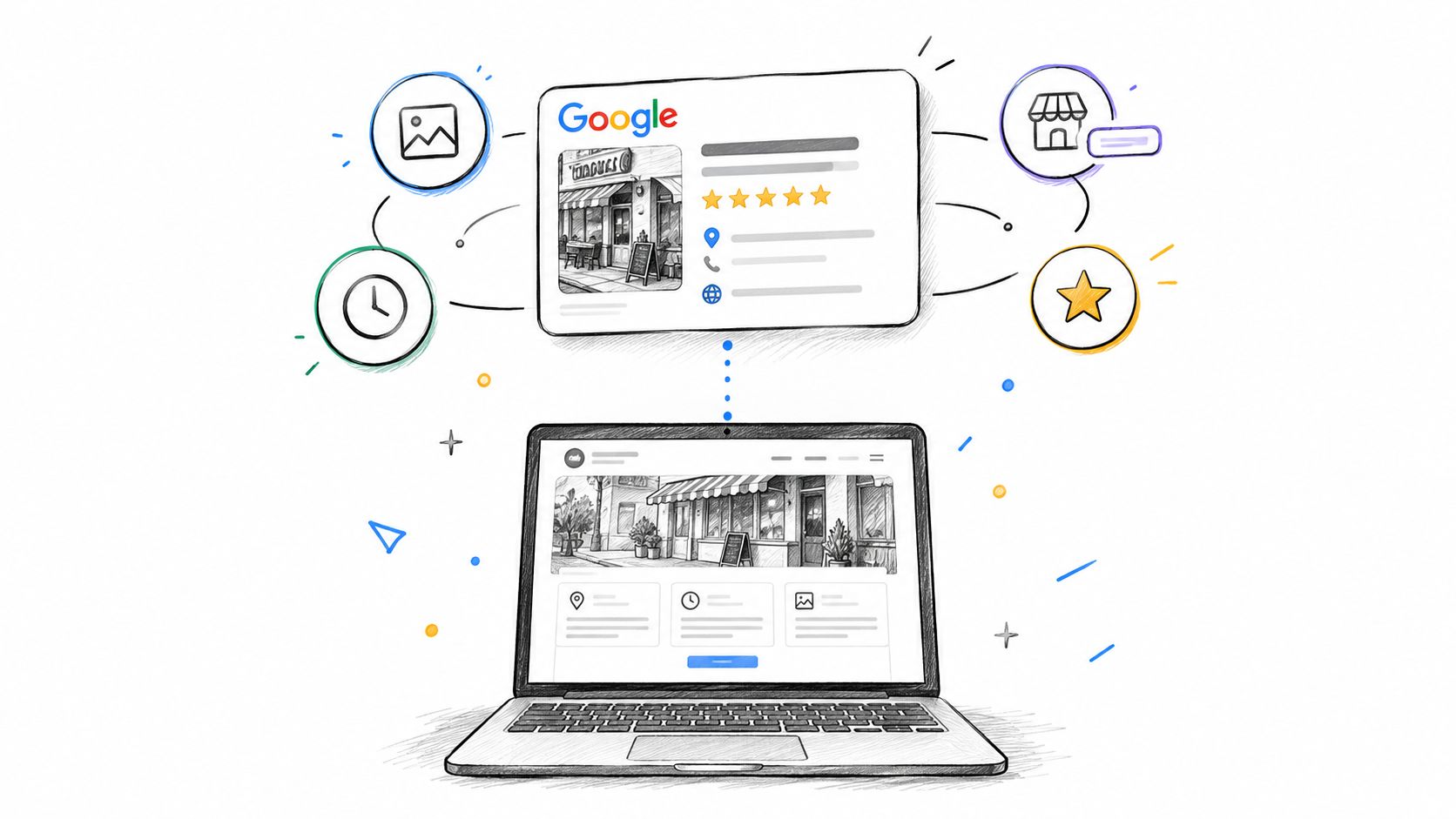
Relevance asks, “Does this business offer what the person wants?” A full Google Business Profile, the right categories, a list of services and focused web pages all help answer that. If you fix furnaces but your profile only says “home services,” Google and the customer have less to go on.
Distance asks, “How far is this business from the person searching?” A service-area business should list the towns it covers and keep its location details the same everywhere. A nearby provider with a clear area is more useful than a far-off one with vague wording.
Prominence asks, “How well known is this business?” Google says this is partly based on how many websites link to you and how many reviews you have. Mentions, useful content, photos and an active profile help too. These signals don't replace a clear offer. They back it up.
Match the searcher's stage
A research search might be “signs your furnace needs repair.” It can put your name in front of a future customer, but that person may not be ready to call yet. A search like “emergency furnace repair in Columbus” has a much stronger signal. It names a service and a place.
Comparison searches sit in between. Someone searching “best furnace repair company in Columbus” is weighing options. They want proof, price ranges, open slots or service details. Your pages should answer those questions. Don't make them dig through a general homepage to find them.
Why the map pack matters so much
The map pack is the group of business listings with a map that Google shows for many local searches. Think of it as the biggest shop signs on the street. People can call, visit your site, send a message or get directions right from it.
In First Page Sage's 2026 click-through study, the top map pack spot got 14.8% of clicks. Spot two got 12.6% and spot three got 11.9%. The study also found that clicks on the top map spot fell just 16% in a year. Over the same time, clicks on the top organic result fell 82% as AI answers spread. A 2022 SOCi study of over 300,000 Google listings found that listings in the top three earned 126% more search traffic and 93% more actions than listings further down in Google's Local Finder. The lesson is simple. Getting into the top three can matter far more than a small gain lower down.
Google search is just one door, though. AI answers, local ads, social groups and word of mouth can all answer a question before someone reaches your site. First Page Sage found that a business named inside an AI answer got 7.3% of clicks on local searches. So local SEO lead generation means being useful wherever people decide, not just ranking higher in one spot.
Build Your Local Foundation, From Profile to Website
Your local setup should work as one connected system. Your Google Business Profile tells Google and buyers what you do. Your website explains each service in depth. Listings on other sites confirm the same name, phone and location. Good technical setup makes it all easy to load and read.
Start with your profile, because it is often the first place someone decides to call. Claim and verify it. Pick the most accurate main category, then add other categories that fit. List your services, check your hours and set your service area. Upload real photos of your team, vans, tools and finished jobs. If customers don't come to your address, remove it and show a service area instead. And if you work by appointment, keep your hours up to date.
Build in the right order
When time is short, work through these steps in order:
- Fix the core details. Check your business name, phone number, website, hours, address or service area, and main category.
- Make the offer clear. Add services, short descriptions, booking options and regular profile updates.
- Build out the website. Create focused pages for each main service and each area you cover.
- Clean up other listings. Make your name, address, phone, hours and services match across the directories that matter.
- Make it easy to act. Check mobile layout, page speed, forms, tap-to-call links and clear paths to contact you.

Your website shouldn't copy your profile word for word. It should answer the questions a serious buyer still has. A page for “emergency electrical repair” might explain common problems, what happens during the visit, which areas you cover and how to get help fast. An area page should include real local details, not just a city name swapped into the same template.
Internal links tie the pages together. Link a local job story to the right service page. Link that service page to your contact page. Add LocalBusiness structured data where it truly describes your business. But treat it as a helper, not a stand-in for useful content.
Outside listings work best when they are trusted and consistent. A chamber of commerce page, trade directory, local group or local news site can confirm who you are and where you work. Don't create dozens of low-quality listings just to add more. Fix wrong or duplicate listings first. Then focus on the ones people and search engines trust.
For tools that help with profiles, listings and reports, see these local marketing tools.
Turn Reviews Into More Local Leads
People rarely judge a local business on ranking alone. They look for proof that you handle their kind of job, work nearby, talk clearly and finish the work. Reviews give them that proof right when they are deciding whether to call. Google also says that more reviews and good ratings can help your local ranking.
How recent your reviews are, what they mention, how many you have and how you reply all shape how you look. A review that says “same-day AC repair in Mesa” tells the next buyer far more than “great service.” It also ties your business to a service and a place in the customer's own words.
That doesn't mean you should ask customers to use keywords. Ask for honest feedback about what happened. If a homeowner mentions the problem, the fix and their area in their own words, the review builds trust and local relevance at the same time.
Ask every customer at the right moment
The best time to ask for a review is right after a clear win. For a cleaner, that might be when the customer checks the finished work. For a dentist, it might be after a good visit. For an electrician, it might be once the fix is done and the customer knows what was wrong.
Make the request easy and fair:
- Send a direct link. Google lets you create a review link or QR code that takes customers straight to your review form.
- Never pay for reviews. Google's rules ban any incentive for a review, such as cash, discounts or free work. That applies to all reviews, not just good ones.
- Ask everyone, not just happy customers. Google also bans asking only the customers you expect to leave good reviews.
- Give your team a simple line. A tech can say, “If we solved the problem, we'd love your honest feedback.”
- Keep a steady pace. A steady flow of reviews looks more natural than a sudden burst after months of silence.
Reply as if a future customer is reading
A reply to a good review can mention the job without turning into a sales pitch. A reply to a bad review should not argue about private details. Thank the person, show you understand the issue and invite them to talk offline. Then explain any next step, without sharing personal information.
Show some reviews on the right pages of your site, but don't lean on them alone. Pair them with real job photos, service details, licenses and a clear way to get in touch. A review about roof repair belongs next to your roofing info, not buried on your homepage.
Practical rule: Treat every review reply as public customer service, not a private argument with one unhappy person.
Create Local Content That Matches Buying Intent
Local content works when it helps someone decide what to do next. Dropping a city name into a general article doesn't make it local. A page that shows how you solve a common problem in a real neighborhood does.
Start with the jobs your team wants more of. A pest control company might focus on mice getting into older homes. A law firm might focus on one type of case for people in one county. Build each page around four things: the service, the place, the problem and the next step.
Build pages around decisions
A useful set of local pages might include:
- Service pages. Explain the job, the warning signs, how it works, when you're free and where you go.
- Area pages. Describe how you serve a certain town or neighborhood, with details that are true for that place.
- Buyer guides. Help people compare options, prepare for a visit or understand what affects the price.
- FAQs. Answer real questions about timing, access, prep, warranties or what happens during the visit.
- Job stories. Show the problem, your fix, the result and the local setting, without sharing private customer details.
A guide like “how to stop a dripping faucet” can bring in readers. A page called “emergency faucet repair in Tampa” speaks to someone who wants to hire. Both have a place. But a service business should usually build strong service and comparison pages before it writes lots of general advice. LocalMighty's guide to getting more leads from local SEO makes the same call. It puts urgent and ready-to-buy searches first and treats general advice as support.
Make each area page earn its place
An area page needs more than a new heading. Include the services you offer there, common home or customer issues, travel or booking details, local job examples and answers to questions people in that area ask. Link to the right service pages and make it easy to get in touch.
Don't create pages for places you don't serve. They annoy visitors, hurt trust and bring in leads your team can't take. They can also break Google's rules. Its spam policies list near-copy pages aimed at different cities as “doorway abuse.” If two towns need the same information, combine them into one stronger service-area page.
Use the words your customers use. Listen to call recordings, read staff notes and reviews, and note the questions people ask in local groups. If customers keep asking whether you take urgent calls, give written quotes, work with landlords or cover a certain neighborhood, answer those questions on your pages.
A good test: Remove the town name from the page. If nothing else changes, the page isn't local enough.
Add Social Listening to Catch Leads Google Misses
Google only sees the searches that happen on Google. Many people ask for help in local Facebook groups, on Reddit or in other online communities instead. They may never click a map result. A friend might answer first, or the group itself might solve the request.
That gives you a useful split. Local SEO keeps you visible to people who search. Social listening finds public posts where people describe a problem and ask who can help. One brings in steady demand over time. The other can spot a request while it is still fresh.
You can watch places like Facebook groups, Reddit, Nextdoor, LinkedIn, X, Bluesky and Threads for posts that mention your service and your area. A good process filters posts by location. It separates real requests from general chat, flags urgent jobs and drops repeat posts. It should also give your team enough context to write a real reply, not a generic ad. For tactics on specific sites, see these guides on getting leads from Facebook groups and Reddit lead generation.
Turn monitoring into a response process
A small business doesn't need another stream of random alerts. It needs a clear path from post to reply:
- Spot the request. Find a public post that asks for a service or a recommendation.
- Check the location. Make sure the town, neighborhood or group fits your service area.
- Check the intent. Tell “who knows a good roofer?” apart from a general rant about roofs.
- Check the fit. Make sure the job matches what you actually do.
- Reply fast and helpfully. Give a short answer, name the service and offer to talk in private if it makes sense.
- Log the outcome. Note whether the person replied, booked, said no or was outside your area.
Social media listening platforms can handle much of this work. They gather public posts in one place, filter them by location and intent, and send the best matches to your inbox. That matters because a social lead loses value the longer it sits.
Here's how the main local lead channels compare:
| Channel | Best for | How fast leads come | What signals quality |
|---|---|---|---|
| Local SEO | Steady leads from service and location searches. | It builds over time, but a strong profile can bring calls right away. | Search words, service match and location. |
| Social listening | Public requests and recommendations in local groups. | It's fast if you check alerts and reply the same day. | A clear request, a location and urgency. |
| Local ads | Demand for the services you choose to promote. | You show up right away while the ads run. | Search terms, ad clicks, calls and forms. |
| AI search | Getting named when AI tools list local options. | It depends on the question and the tool. | Accurate details, reviews and local relevance. |
Social outreach must follow each site's rules and the group's norms. Don't paste the same sales message into every group. Answer the actual request, say you own the business when it matters and stop if the person says no.
Measure Booked Jobs, Not Traffic
A map view isn't a job. A website click isn't always a lead. Even a phone call might come from a supplier, a current customer, a spammer or someone outside your area.
Track each inquiry with a simple process. Note whether it was a real request, the service, the town or neighborhood, how urgent it was, where it came from, how fast you replied, whether it booked and how it ended. This shows the real return on local SEO far better than traffic alone.
The most useful report shows:
- Qualified calls. Real buyers asking for a service you offer.
- Booked jobs. Leads that made it onto the calendar.
- Area fit. Whether the customer is inside the area you serve.
- Service fit. Whether the job matches your best or most wanted services.
- Reply speed. How fast someone answered the inquiry.
- Cost per qualified lead. What you spent, divided by real leads, not every contact.
Speed deserves its own check. A well-known 2007 lead response study by InsideSales and MIT's James Oldroyd looked at web leads. It found that contacting a lead within five minutes produced 21 times more qualified leads than waiting 30 minutes. The data is old, but the lesson holds. Set up alerts, call routing and follow-up before you chase more traffic.
Start with a quick audit:
- Check your profile and service area.
- Test every call button, form, booking link and mobile contact path.
- Find the pages and sites that bring in real leads.
- Tag each lead by service, location, urgency and outcome.
- Fix the slowest handoff before you publish more content.
- Review the numbers often and fix one weak spot at a time.
Local SEO Lead Generation FAQs
How long does local SEO take to bring in leads?
It depends on your market and your competitors. Fixing your profile, categories and contact paths can help quickly, because people may already be finding you. Reviews, links and local pages build up over months. Track booked jobs from the start so you can see what is working.
Can a service-area business rank without showing an address?
Yes. Google says that if you don't serve customers at your address, you should remove it from your Business Profile and set a service area instead. Be honest about the areas you cover, and build pages only for the places you actually serve.
Does social listening replace local SEO?
No. Local SEO catches people who search on Google and in maps. Social listening catches people who ask their neighbors instead. The two work best together, with one reply process behind both.
Local SEO lead generation works best as a full system. Get found in the map pack, earn trust with reviews and real pages, and reply faster than the next business. Then track booked jobs, not clicks.
If you also want to monitor social media for leads, try ThroughTheGrapevine.ai. It watches Facebook groups, Reddit, X and other social sites for people in your area who are asking for the services you offer. Each lead arrives by email with the post, a direct link, the location, an intent score and a suggested reply. You don't need to connect any social accounts. You can try it free for 7 days, with no credit card needed.