10 Brand Monitoring Tools for Smarter Reputation Tracking
Most brand monitoring tools answer one question: what are people saying about your brand? That's a good question for a big company. But for a local service business, it's often the wrong one. A tool that counts mentions of your name won't tell you that a neighbor just asked for a plumber.
So this list does two jobs. It compares nine well-known brand monitoring tools, from large research suites to low-cost apps you can set up yourself. It also covers our own tool, ThroughTheGrapevine.ai, which looks for local leads instead of brand mentions. For each one, we explain what it does well and where it falls short.
These tools are a big business now. Mordor Intelligence puts the social media listening market at $11.19 billion in 2026. It expects that to reach $19.02 billion by 2031. With so many options, the hard part is picking the right kind of tool for your job.
We checked each vendor's own site in October 2026. Prices change often, so confirm them before you buy.
Here are the quick picks:
- ThroughTheGrapevine.ai is best for local service businesses. It finds people nearby who are asking for what you do.
- Brandwatch is best for deep research. It has a huge archive and very precise search.
- Meltwater is best for PR teams. It tracks news and social media in one place.
- Sprout Social is best for social media teams. Its listening tools sit right next to posting and replies.
- Brand24 and Awario are best for small budgets. Both show their prices up front and are quick to set up.
- YouScan is best for finding your logo in photos. It reads images, not just text.
Table of Contents
- 1. ThroughTheGrapevine.ai
- 2. Brandwatch
- 3. Lumen by Talkwalker
- 4. Meltwater
- 5. Sprout Social
- 6. Sprinklr
- 7. Brand24
- 8. Agorapulse Listening (Formerly Mention)
- 9. Awario
- 10. YouScan
- Brand Monitoring Tools Compared
- How to Choose a Brand Monitoring Tool
1. ThroughTheGrapevine.ai
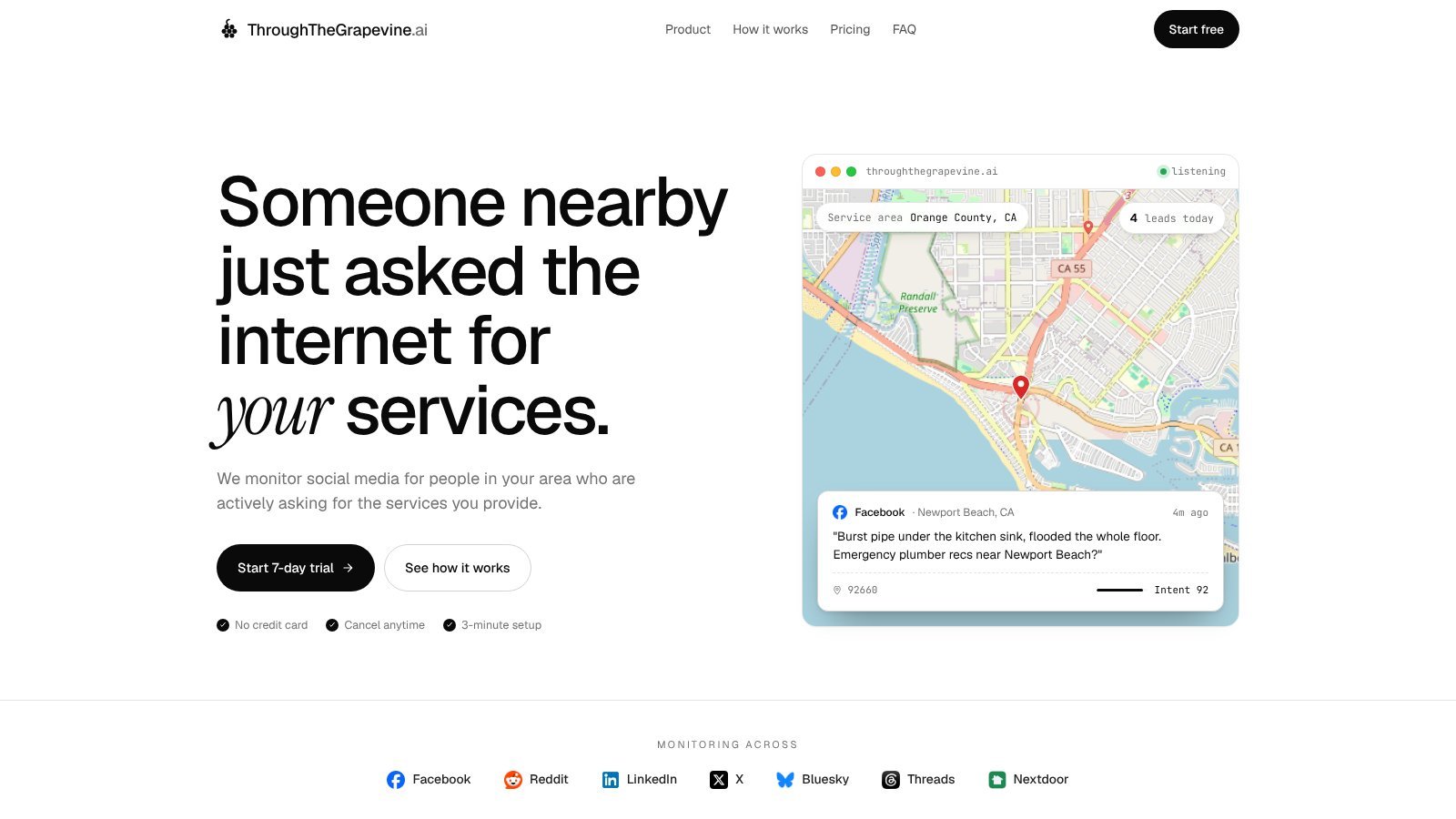
ThroughTheGrapevine.ai is our own tool, so we'll be upfront about what it does. It isn't a classic brand monitoring tool. It won't count every mention of your name or chart how people feel about your brand. Instead, it finds people in your area who are asking for the services you offer.
Think of a post like "Anyone know a good roofer in Costa Mesa?" A brand tool would skip it, because it doesn't name you. For a local roofer, that one post can be worth more than a hundred mentions.
How it finds local leads
Setup takes a few minutes. You paste in your website and set your service area. The tool reads your site to learn what you do. Then it builds a list of the phrases people use when they need you, such as "need a plumber" or "water heater leaking."
It reads public posts on Facebook groups, Reddit, LinkedIn, X, Bluesky, and Threads. For Facebook, you add the groups you want it to watch. The other sites run on keywords. Our guide to getting leads from Facebook groups explains why those groups matter so much. You don't connect any social accounts, and it never posts for you.
Each post then goes through three filters:
- Location. It pulls city names, ZIP codes, area codes, and neighborhoods from each post. It also checks the group or subreddit and the poster's profile. Posts from outside your area are dropped.
- Intent. Each post gets a score from 0 to 100 for real buying intent. "AC died, need it fixed today" scores high. A rant about prices scores low.
- Duplicates. If one person posts the same job in three groups, you hear about it once.
Pricing and trade-offs
There's one plan. It costs $99 a month and includes unlimited leads. You can try it free for 7 days, with no credit card needed.
It scans every platform every 8 hours. After each scan, you get one email with all the new leads. Each lead shows the post, a direct link, the location, an intent score, and a suggested reply. You can also see your leads in a dashboard or export them to a CSV file.
The trade-offs are simple. It won't track news stories, review sites, or what people say about your brand. It won't spot your logo in photos. And since it scans every 8 hours, it isn't built for crisis alerts. If you need those things, pick one of the tools below. If you want more jobs from people who are already asking for help, this is what it's built for.
Best for: Plumbers, HVAC techs, roofers, landscapers, and other local service pros who want leads, not mention counts.
Website: ThroughTheGrapevine.ai.
2. Brandwatch
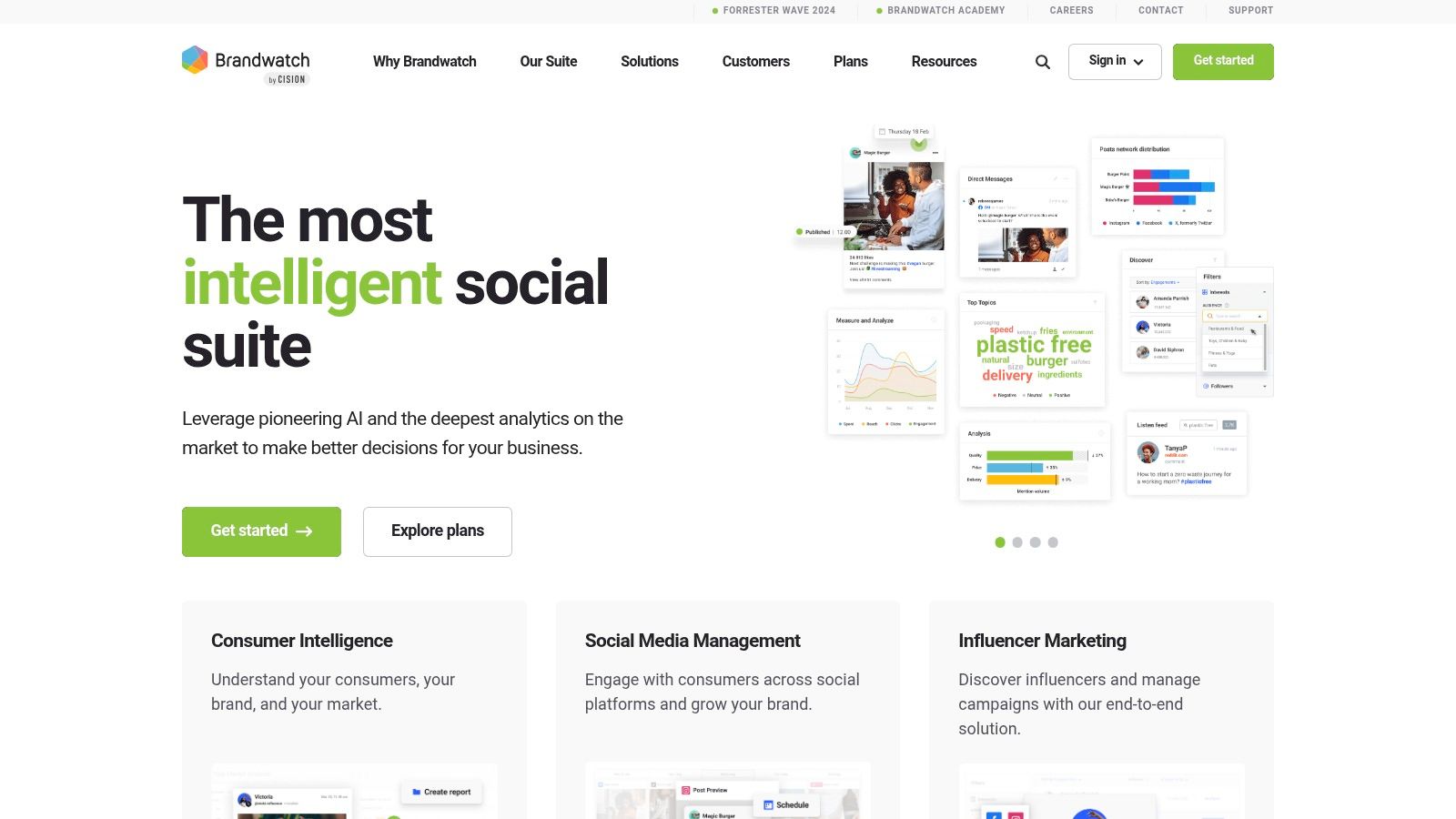
Brandwatch is built for teams that treat brand monitoring as research. Its main listening product is called Consumer Research. Brandwatch says it draws on more than 100 million sources. Its archive holds 1.7 trillion conversations, going back to 2010. That depth lets analysts track brand health over years, not just weeks.
It covers the big networks, including Facebook, Instagram, YouTube, X, Reddit, and LinkedIn. Analysts can write detailed searches to split product feedback from support complaints. They can also compare audiences and build dashboards for each team. An AI assistant called Iris helps write searches and sums up large sets of results in plain words.
Brandwatch also has a Search Intelligence product. It shows how your brand appears in Google, Amazon, TikTok, and ChatGPT. That matters more each year, as people ask AI tools for advice instead of searching.
Where Brandwatch earns its cost
Brandwatch is owned by Cision, so it ties in with Cision's PR tools. It also runs a free training site called Brandwatch Academy. You'll likely need it. Good results depend on well-built searches, and someone has to own them.
Tip: Build a library of tested searches before you build dashboards. A polished dashboard full of off-topic posts still leads to bad calls.
Pricing isn't public. You book a demo to get a quote, and there's no free trial. For a small business, that's usually more cost and setup than the job needs. If you're still weighing the options, our guide to social media monitoring software explains how this kind of research differs from finding local leads.
Best for: Research and insights teams at large brands.
3. Lumen by Talkwalker
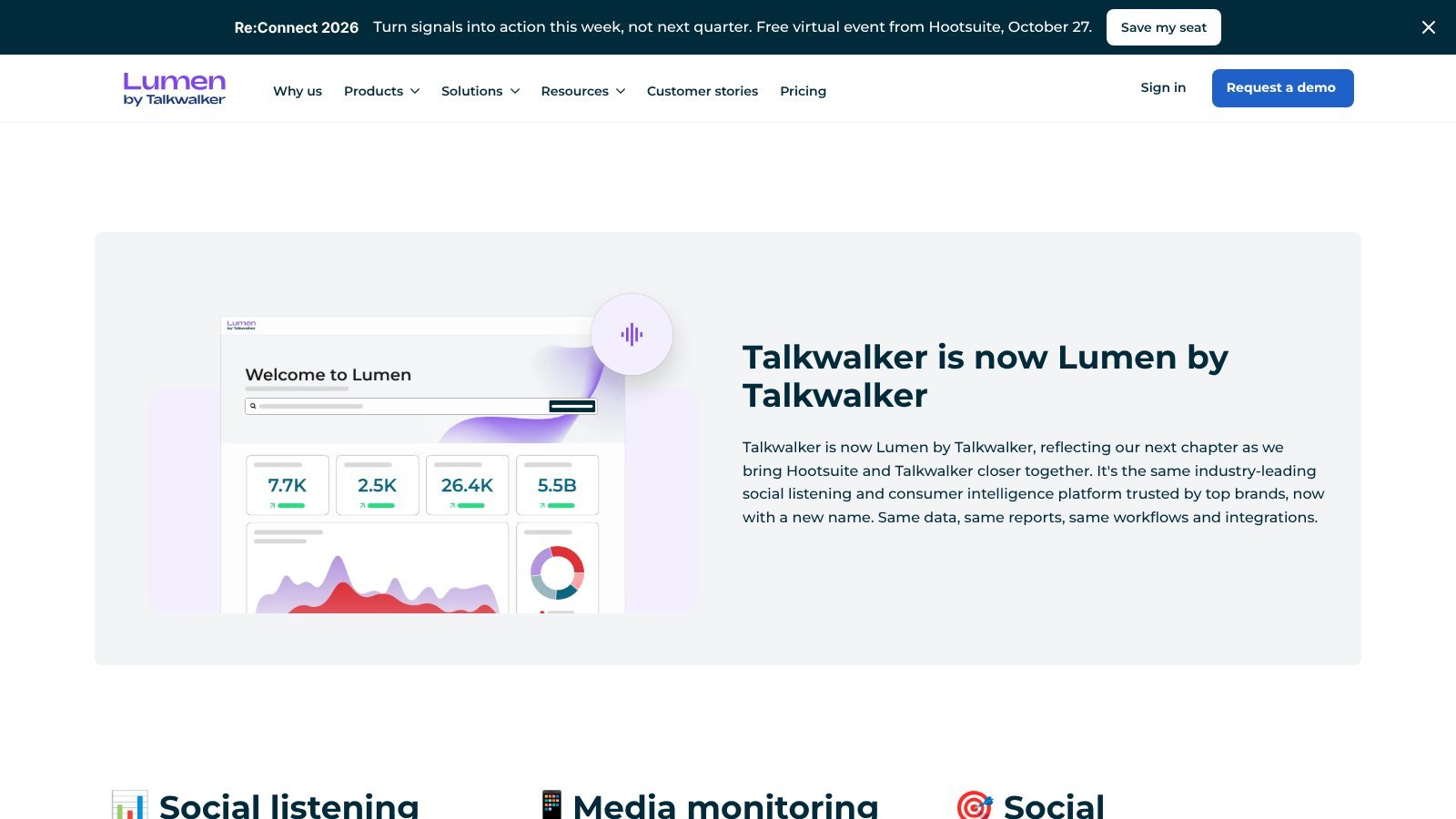
Talkwalker is now called Lumen by Talkwalker. Hootsuite bought the company in 2024 and has since renamed the platform. The data, reports, and workflows stay the same. It suits global brands that need social listening, news tracking, and AI help in one place.
Its standout skill is visual listening. Lumen can find your brand in images, video, and audio, even when nobody types your name. That's a big deal for brands whose logo shows up on jerseys, packaging, or event photos. It covers more than 30 social networks, over 150 million websites, and podcasts, in 187 languages.
The AI tools save analysts time. An AI Agent answers questions about your data in plain words. A feature called Wisdom spots spikes, writes summaries, and forecasts trends. Ready-made dashboards, called IQ Apps, cover common use cases. A tool called LLM Insights shows how AI assistants describe your brand.
The trade-off for smaller teams
There are three plans: Core, Analyze, and Business. Each step up gives you more data, more topics, and more history. Every plan includes unlimited users and guided onboarding. But prices are only shared in a custom quote, and there's no free trial.
Start with a clear question before you buy. Are you tracking a campaign, watching rivals, or checking how AI tools describe you? Then test whether Lumen covers the markets and languages you care about. A long list of sources won't help if your customers' talk is missing.
Best for: Global brands that need to spot their logo in images and video.
4. Meltwater
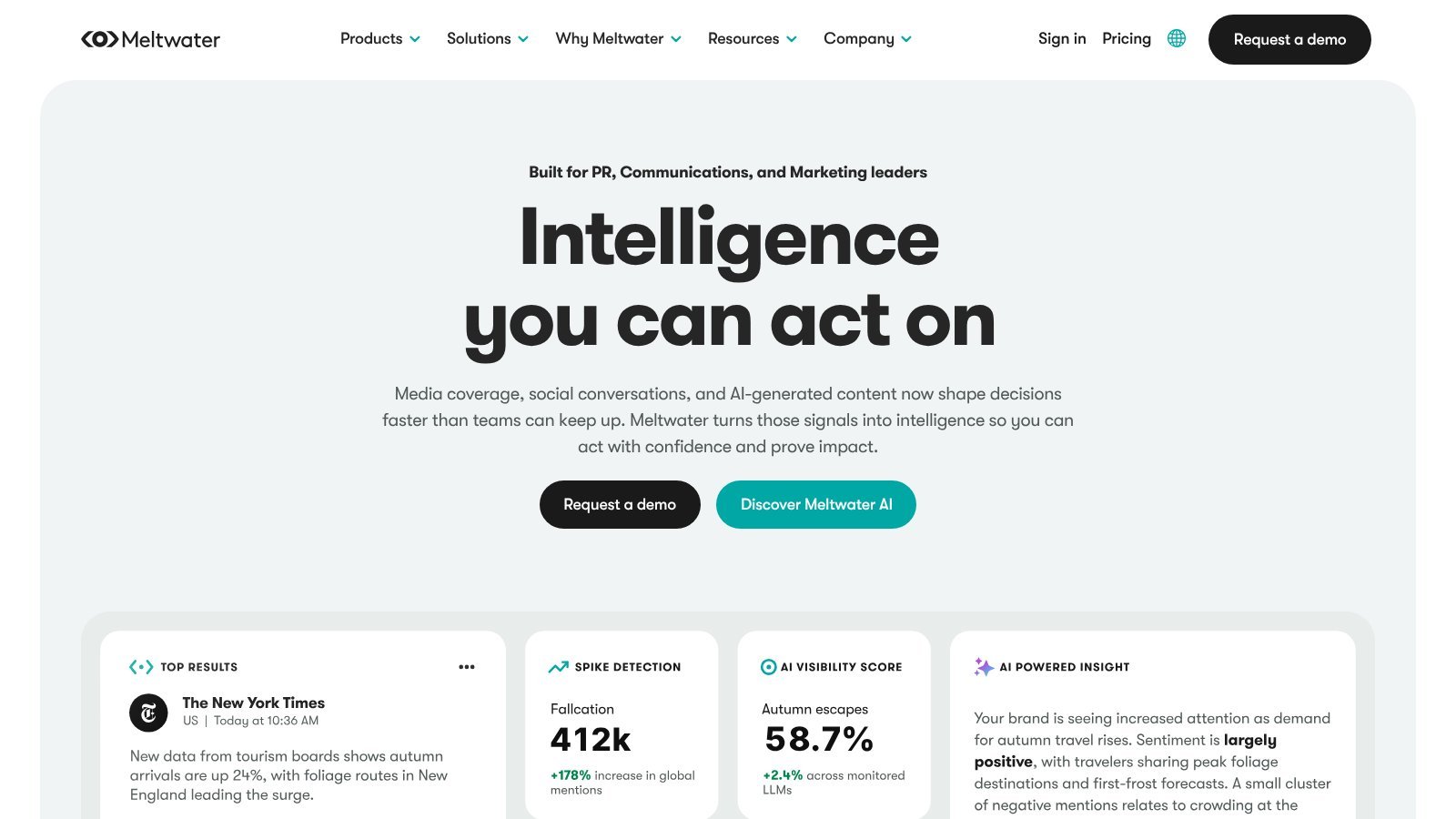
Meltwater is built for PR, comms, and marketing teams that need news and social data together. It combines social listening, media monitoring, influencer tools, alerts, and reports. Its AI assistant, Mira, answers questions and writes summaries. Meltwater works in more than 240 languages.
That mix changes how a PR team works. It can follow a news story, see how people react on social media, and compare that with rivals. Then it can build a report without jumping between tools. A newer tool, GenAI Lens, tracks how ChatGPT, Gemini, Claude, and other AI tools talk about your brand.
Meltwater is most useful when news coverage matters as much as social media. It makes less sense if you only need a simple stream of mentions. A small service company could pay for a lot it never uses.
Set it up around who responds
Split your alerts into groups. Keep urgent issues, routine coverage, rival news, and campaign reports apart. Then give each group an owner. Without owners, a shared dashboard turns into an archive.
Check the contract terms with care. All four plans (Starter, Pro, Enterprise, and Agency) are priced by quote. Most deals run for at least 12 months, and there may be a one-time setup fee. API and MCP access are only on the Enterprise and Agency plans. On the plus side, every customer gets 24/7 support. There's no self-serve trial, so ask for a demo with your own brand terms and known news stories.
Best for: PR and comms teams that report on news and social media together.
5. Sprout Social
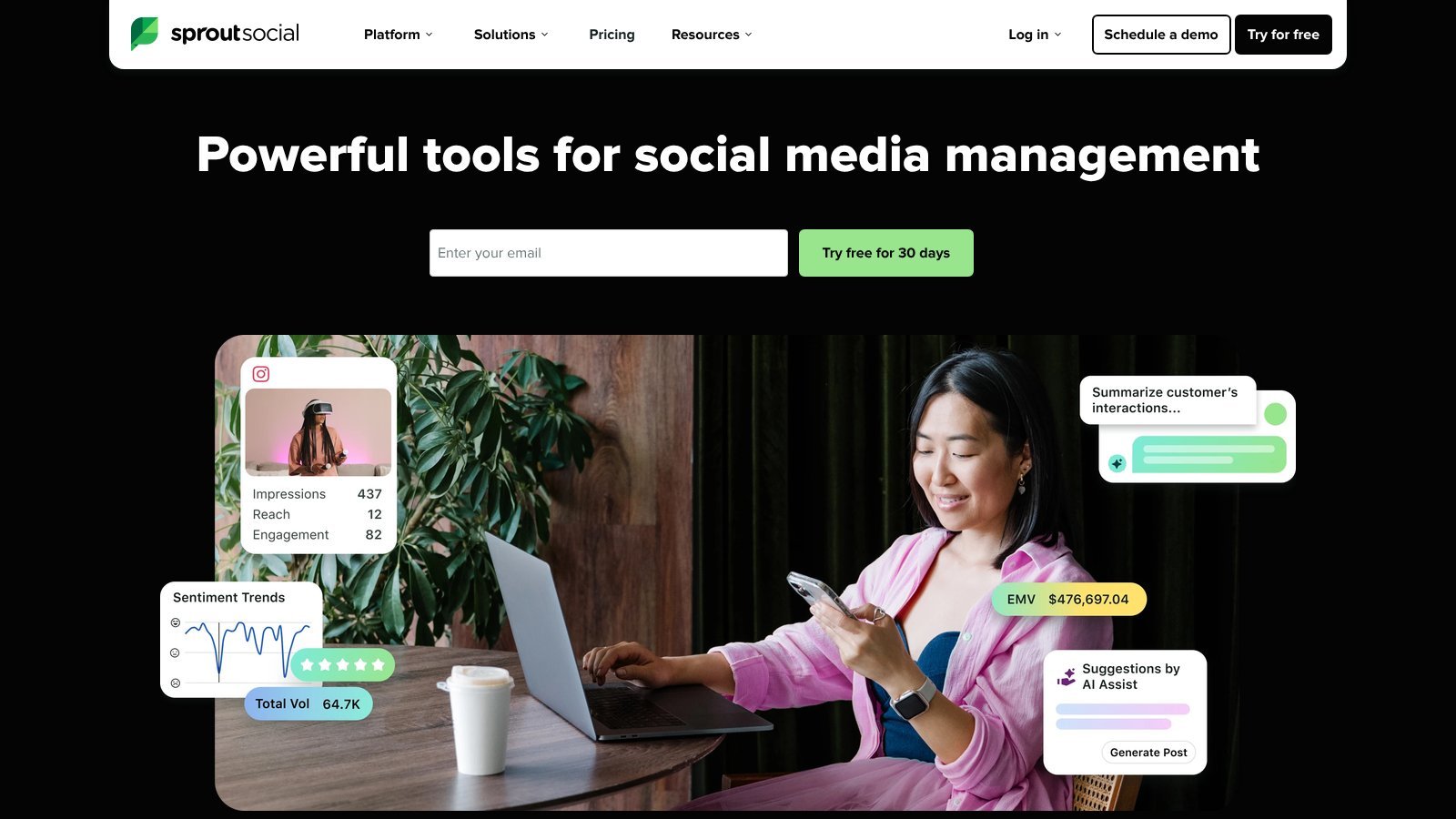
Sprout Social is a social media management tool first. Teams use it to post, reply, and report from one place. Brand monitoring is an extra layer on top.
There are two parts to that layer. The first is Brand Keywords, which tracks keywords, hashtags, and locations on X inside the Smart Inbox. It's handy for quick replies, but it only covers X. The second is Listening, a paid add-on with sentiment scores, topic grouping, and spike alerts. Listening pulls from X, Facebook, Instagram, Reddit, TikTok, YouTube, Bluesky, Tumblr, and the wider web.
This setup works well for a marketing team that already posts with Sprout. Spotting a spike and replying to it happen in the same tool. It's less suited to teams whose main need is deep research across forums, news, and niche sites.
Buy the workflow, not just the inbox
Sprout charges per user, so costs grow as your team grows. Plans run from $79 a month for Essentials to $399 a month for Advanced, per user, billed yearly. Listening is only offered on Standard ($199 per user a month) and up. Its price isn't public, so you'll need a demo to get a quote. Sprout does offer a 30-day free trial with no credit card.
If your team already posts in Sprout, the Listening add-on can save you a second tool. If monitoring is your main goal, test a tool built for it first.
Best for: Social media teams that want listening next to posting and replies.
6. Sprinklr
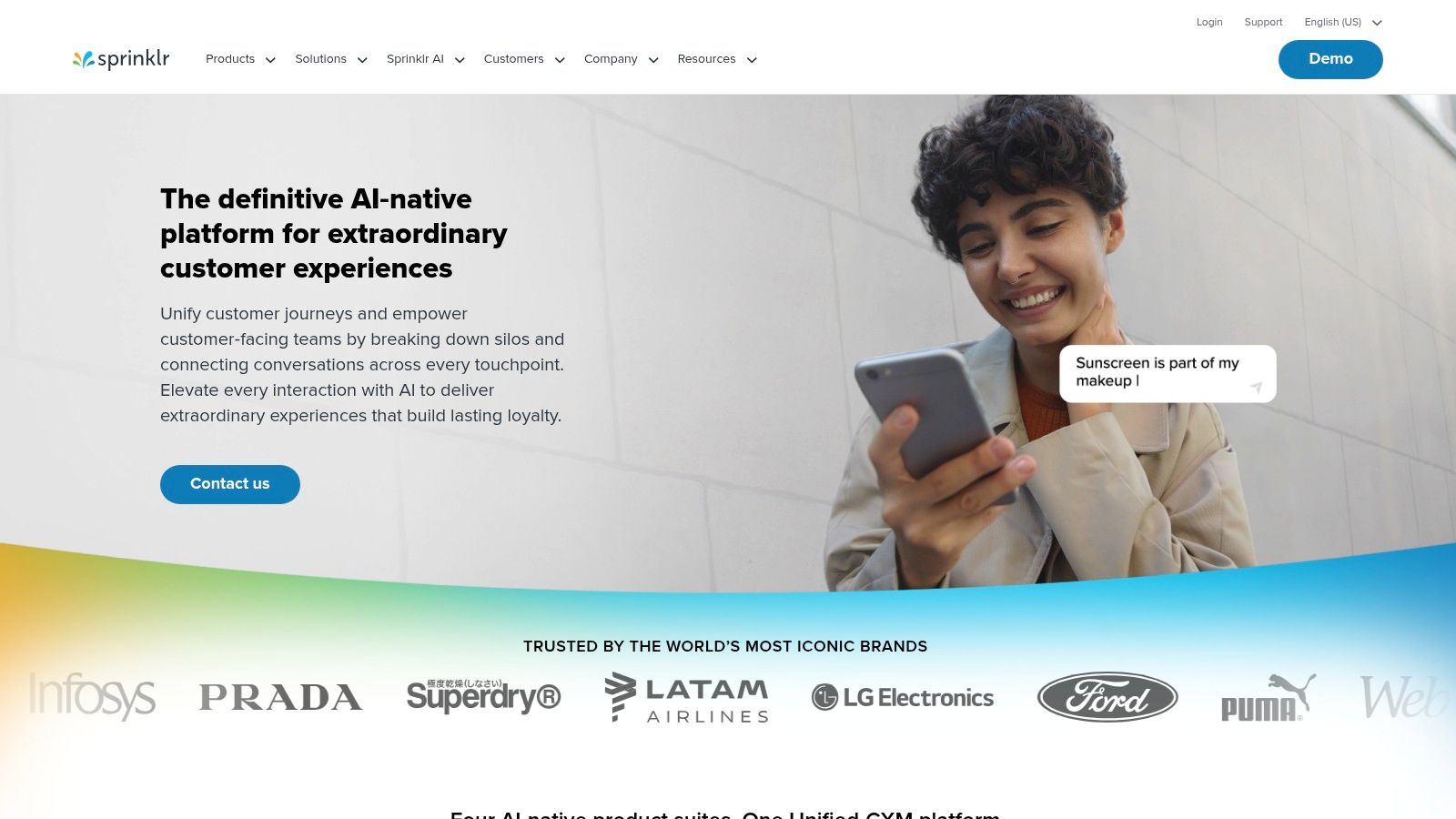
Sprinklr is built for very large companies with many brands, regions, and rules to follow. Its listening tools sit next to publishing, ads, and customer service in one system. Sprinklr splits these into four suites: Insights, Social, Marketing, and Service.
The listening covers more than 30 social and digital channels. AI sorts posts by sentiment, emotion, and topic. Sprinklr can also spot your logo in images, GIFs, and videos. A newer tool, LLM Insights, tracks how ChatGPT, Gemini, and Perplexity talk about your brand.
The real draw is control. Big firms can set who sees what, who approves what, and who responds. Audit trails show who did what and when. That matters for firms in fields with strict rules, like banking and healthcare.
Setup decides the outcome
Sprinklr takes more planning than most tools on this list. Before you start, decide on brands, markets, user roles, and who handles each type of alert. Skip that step, and users get a complex workspace with no clear sense of what's theirs.
A single platform only cuts complexity after your teams agree on who owns what.
Sprinklr ended its self-serve plans in 2026, so every deal now starts with a demo and a quote. It's a strong fit for global firms. It's far too much for a small team that just wants to know when its name comes up.
Best for: Global companies that need strict control across many teams and regions.
7. Brand24
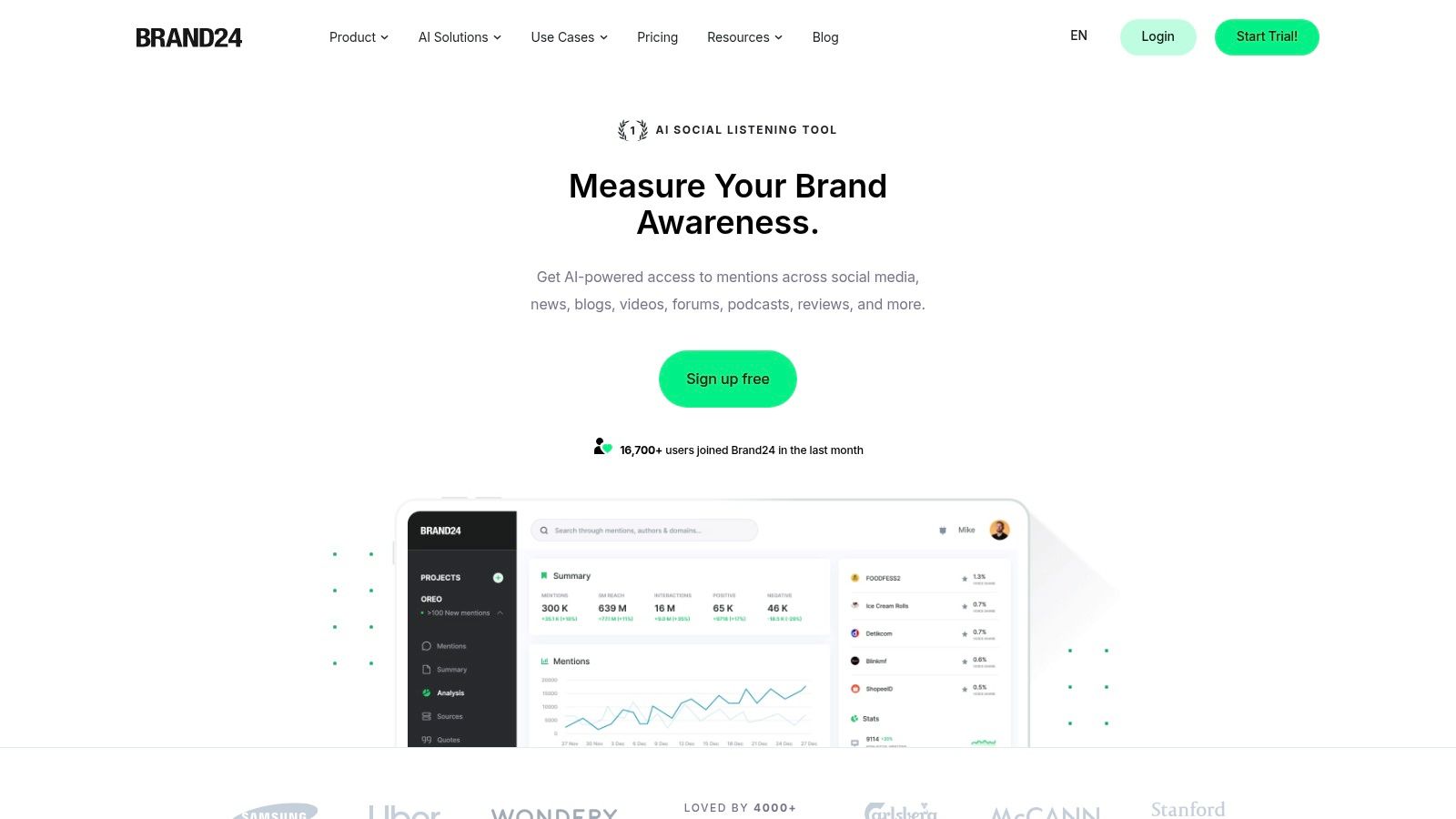
Brand24 is one of the easiest brand monitoring tools to start with. You can sign up, add your keywords, and see mentions the same day. There's no sales call, and the prices are on the website.
It tracks Facebook, Instagram, X, Reddit, news sites, and blogs on every plan. Higher plans add LinkedIn, YouTube, TikTok, reviews, newsletters, and podcasts. AI sorts each mention as positive, negative, or neutral. It also alerts you when mentions suddenly spike, so you can spot a problem early. Alerts can go to Slack or Microsoft Teams on any plan.
Watch your limits
Each plan caps your keywords and monthly mentions. So list what you need before you pick a plan. Include your brand name, product names, common typos, and rival names. A narrow list may miss key posts. A broad one can burn through your limit on junk.
Here's how the main plans compare, with yearly billing:
- Individual costs $199 a month. It tracks 3 keywords and 2,000 mentions a month, with updates every 12 hours.
- Team costs $299 a month. It tracks 7 keywords and 10,000 mentions, with hourly updates.
- Pro costs $399 a month. It tracks 12 keywords and 40,000 mentions, with real-time updates.
Monthly billing costs more. For example, Individual is $249 a month. Brand24 offers a 14-day free trial with no credit card. API access isn't offered on the two lowest plans. It costs an extra $149 on Pro and Business.
Sentiment scores are helpful, but they aren't perfect. Sarcasm and mixed reviews can fool them. So check negative or unusual mentions by hand. For more on how tools like this compare, see our guide to social media listening platforms.
Best for: Small teams and agencies that want fast setup and public prices.
8. Agorapulse Listening (Formerly Mention)
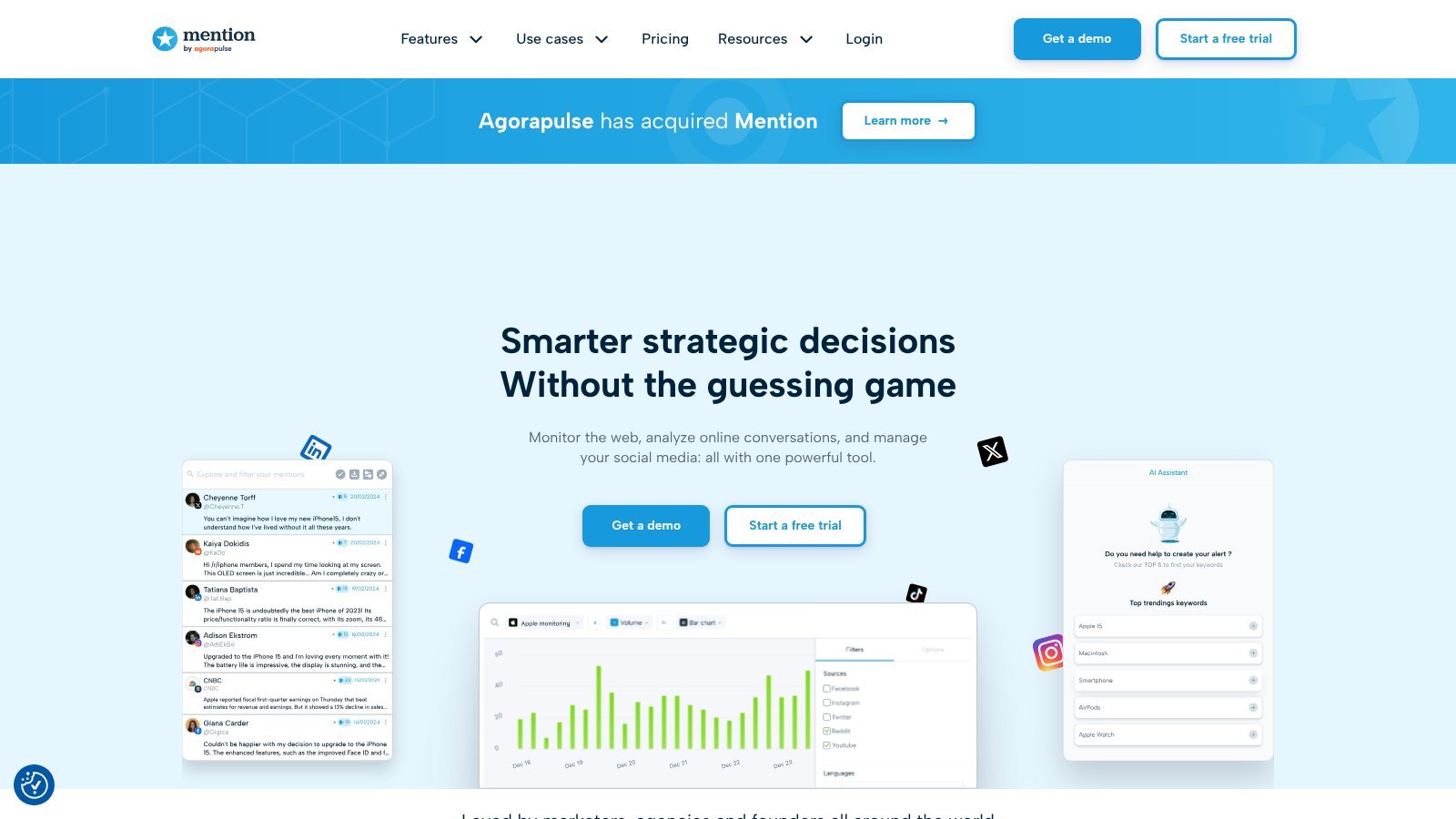
Mention was one of the best-known brand monitoring tools for years. It's now owned by Agorapulse, a social media management company. As of July 1, 2026, Mention is no longer sold on its own. Existing customers can keep their plans. New buyers get Agorapulse Listening instead.
Agorapulse Listening tracks brand mentions and keywords on Facebook, Instagram, YouTube, X, LinkedIn, Reddit, and TikTok. It also covers news, forums, and the wider web. You get up to 24 months of past data, so you can set a baseline and track trends. AI screens out posts that don't match what you meant. You can also compare your share of voice with rivals and export data as CSV, JSON, or PDF files.
What the change means for buyers
The big plus is that listening now sits inside a full social media tool. You can spot a mention, reply to it, and report on it in one place. Agorapulse is now the home for the posting and reply features Mention used to have.
The catch is the buying process. Agorapulse Listening is sold through its sales team, either as an add-on to its higher plans or as its own package. Prices aren't public. So it's less of a quick self-serve tool than Mention used to be.
Before you buy, run a simple test. Set up one alert for your brand name and one for a rival. Then check the results by hand. The best search isn't the one with the most results. It's the one that gives your team enough context to act.
Best for: Teams that want listening and social media management in one tool.
9. Awario
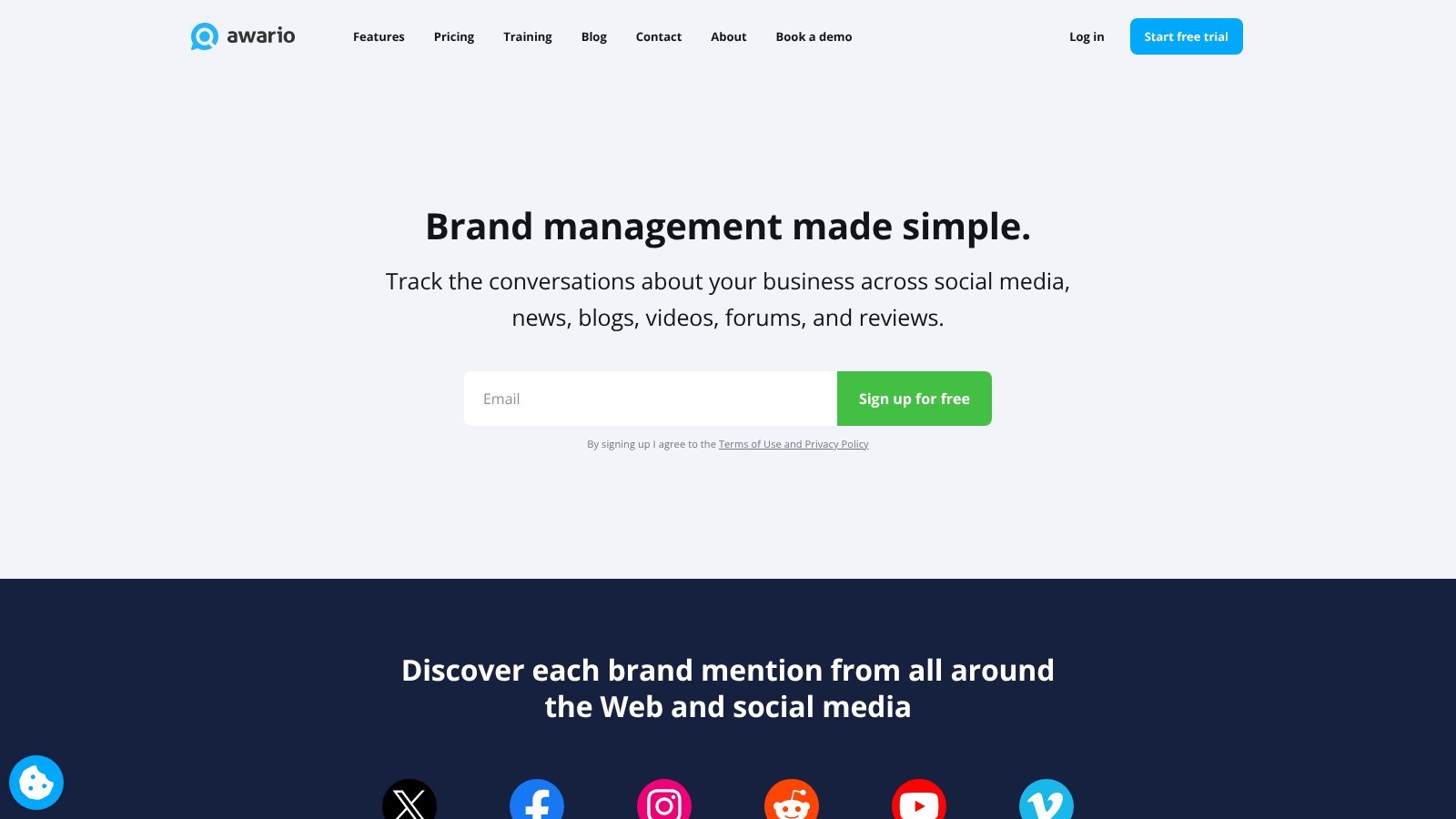
Awario is the lowest-cost tool on this list with a full set of monitoring features. It finds mentions on X, Facebook, Instagram, Reddit, YouTube, and Vimeo. It also checks news sites, blogs, forums, and the wider web. Each mention gets a sentiment score.
Every plan includes Boolean search. That lets you mix words with AND, OR, and NOT to cut out noise. Say your brand name is also a common word. You can add words that must appear nearby, and block words that point to the wrong topic.
Keep your searches tidy
Here's what the plans cost with yearly billing:
- Starter costs $29 a month. It covers 3 topics and 30,000 mentions a month for 1 user.
- Pro costs $89 a month. It covers 15 topics and 300,000 mentions for up to 10 users.
- Enterprise costs $249 a month. It covers 100 topics and 1 million mentions for unlimited users.
Monthly billing costs more, starting at $49 for Starter. Every plan allows unlimited keywords in each topic. There's a 7-day free trial with no credit card. Note that CSV exports and PDF reports start on Pro. White-label reports and API access are Enterprise only.
Low-cost tools leave more of the work to you. Write down why each keyword and block word is there. Then review your feed after big launches or news events. Awario has fewer team controls than the enterprise tools. But for a small team that wants solid tracking at a low price, it's hard to beat.
Best for: Startups and small teams on a tight budget.
10. YouScan
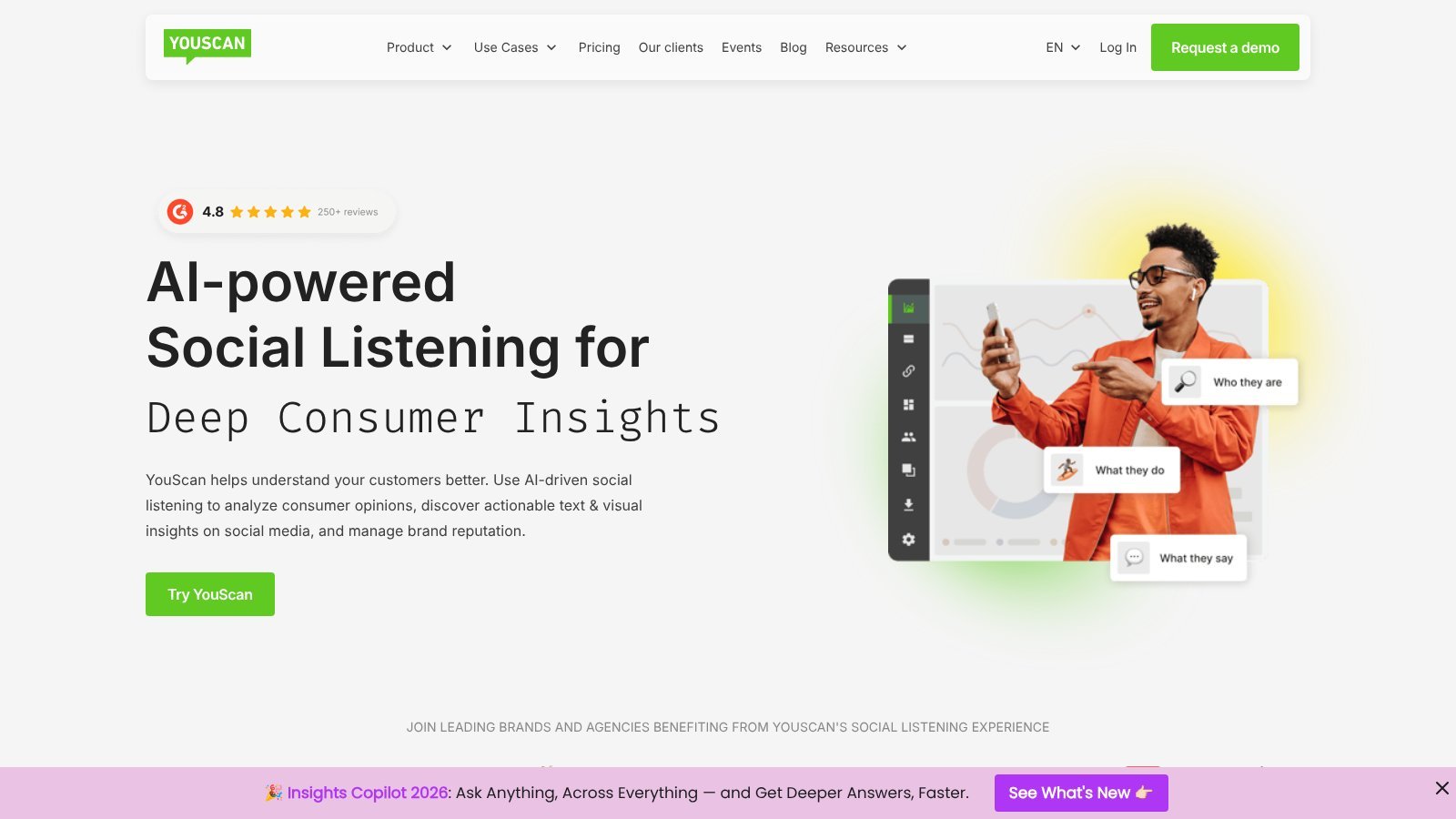
YouScan stands out for reading images. Its Visual Insights tool spots logos, objects, scenes, and activities in photos. It can also estimate details about the people in them, such as age and gender. So it finds posts that show your product even when nobody types your brand name.
That matters for drinks, clothing, events, and other brands that people share in photos. A text-only tool would miss a logo on a shirt or a can in a group photo. YouScan catches those.
It also offers audience insights, custom dashboards, and alerts in Slack, Teams, or WhatsApp. Its AI agent, Insights Copilot, answers questions about your data. YouScan says it's built on ChatGPT.
Plan the visual setup
YouScan does list one price. Its Starter plan costs $499 a month, billed yearly. It covers 3 topics and up to 15,000 mentions a month, with unlimited users. But Visual Insights and audience insights are add-ons on that plan. They're included in the larger Unlimited plans, which are priced by quote. To try it, you request a demo, and YouScan sets up a trial account for you.
Image tracking pays off when you know what you'll do with the results. Decide first if they're for campaign reports, sponsor deals, product research, or replies.
YouScan isn't the right pick for a local service business looking for jobs. It's better for brands that want to see how their products show up in photos.
Best for: Consumer brands that need to find their logo in photos.
Brand Monitoring Tools Compared
| Tool | Best for | Starting price | Free trial | Main trade-off |
|---|---|---|---|---|
| ThroughTheGrapevine.ai. | Local service pros who want leads. | $99 a month. | 7 days, no card. | It finds leads, not brand mentions. |
| Brandwatch. | Deep brand research. | Custom quote. | None. Demo only. | It needs an analyst to run well. |
| Lumen by Talkwalker. | Finding logos in images and video. | Custom quote. | None. Demo only. | It's heavy for small teams. |
| Meltwater. | PR teams that track news and social. | Custom quote. | None. Demo only. | Most deals run for 12 months or more. |
| Sprout Social. | Social teams that post and listen. | Listening needs a plan from $199 per user a month, plus a quoted add-on fee. | 30 days, no card. | Costs grow with each user. |
| Sprinklr. | Global firms with strict rules. | Custom quote. | None. Demo only. | It's too much for small teams. |
| Brand24. | Small teams that want public prices. | $199 a month, billed yearly. | 14 days, no card. | API access costs extra. |
| Agorapulse Listening. | Listening inside a social media tool. | Custom quote. | Ask sales. | Mention is no longer sold on its own. |
| Awario. | Tight budgets. | $29 a month, billed yearly. | 7 days, no card. | It has fewer team controls. |
| YouScan. | Finding your logo in photos. | $499 a month, billed yearly. | Trial after a demo. | Image tools cost extra on Starter. |
How to Choose a Brand Monitoring Tool
The best brand monitoring tools aren't interchangeable. Start with what your team will do once it finds a post. Then pick the tool that fits that job.
For big research and PR programs, look at Brandwatch, Lumen by Talkwalker, Meltwater, or Sprinklr. Brandwatch and Lumen suit deep research and rival tracking. Meltwater suits PR teams that need news and social data together. Sprinklr makes sense when care, posting, ads, and research must run under one set of rules.
Choose Sprout Social or Agorapulse Listening when posting and listening belong in the same tool. Choose Brand24 or Awario when you want fast, low-cost tracking you can set up yourself. Choose YouScan when you need to find your brand in photos.
Local service businesses should think about this a bit differently. A brand tool might tell a plumber that people are talking about burst pipes. But it isn't built to find the person down the street who needs a plumber today. That's a different job, and it's the one ThroughTheGrapevine.ai was built for.
Before you commit to any tool, test the parts that affect daily work:
- Relevance. Are the results about your brand, or do they just match a word?
- Location. Can the tool tell a local request from a general chat?
- Next steps. Can the right person open the post and act on it right away?
- Limits. Do caps on keywords, mentions, history, or API access get in the way?
- Setup. Do you need an analyst to run it, or can an owner set it up alone?
Want leads, not just mentions? If you run a local service business, ThroughTheGrapevine.ai watches public posts on Facebook groups, Reddit, X, LinkedIn, Bluesky, and Threads. When someone in your area asks for what you do, you get an email with the post, the location, an intent score, and a suggested reply. You don't need to connect any social accounts. Try it free for 7 days, with no credit card needed.